 Disney Tips Your Guide To A Great Disney Vacation

Some of the most unforgettable moments in Disney history were created by people whose names most guests never learned. When visitors step into a theater at EPCOT and find themselves completely surrounded by soaring footage of mountains and coastlines, or when audiences watch Julie Andrews and Dick Van Dyke dance through an animated countryside in Mary Poppins, they are experiencing the work of engineers who spent their entire careers perfecting the technology behind the scenes. These innovators rarely sought the spotlight, but their fingerprints are on nearly everything that makes Disney feel like Disney. A few of them left a bigger mark than Don Iwerks.
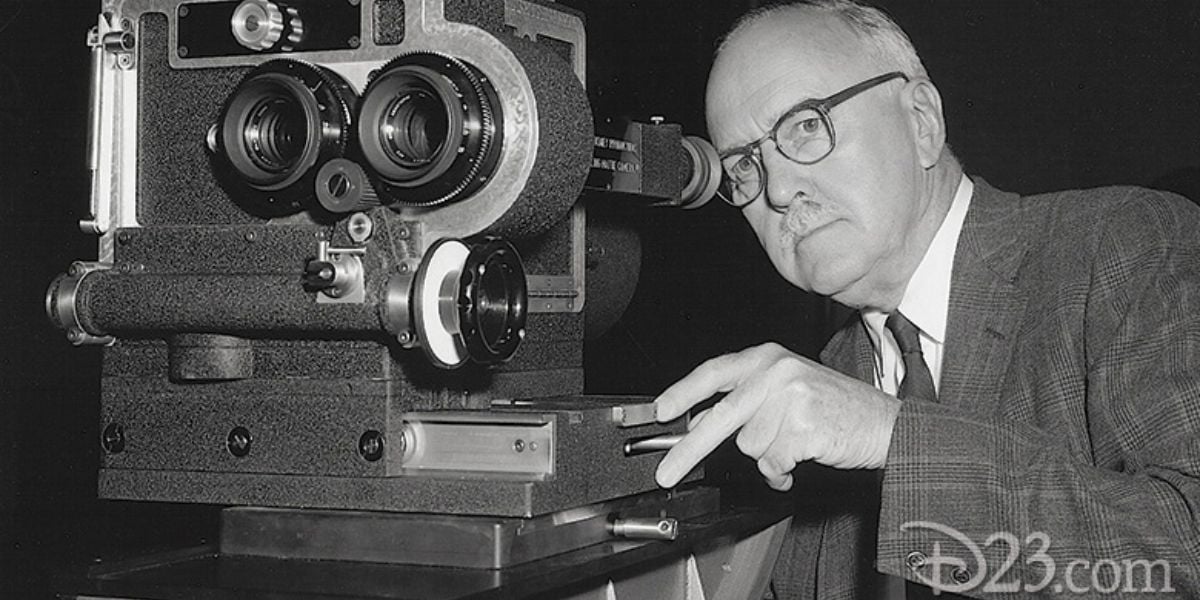
The Walt Disney Company confirmed on July 10 that Iwerks, a Disney Legend whose camera and projection breakthroughs shaped both the studio’s films and its theme parks, passed away on the evening of July 9. He was 96 years old.
If the name sounds familiar to Disney fans, there is a good reason. His father was Ub Iwerks, the legendary animator and effects pioneer who helped design Mickey Mouse himself. But Don built his own remarkable legacy over a 35-year Disney career, one that stretched from the golden age of the studio all the way to the opening of EPCOT.
A Disney Career That Began in 1950
Don Iwerks was born on July 24, 1929, and grew up around the technical wizardry his father brought to Walt Disney Productions. He joined the company in 1950 as a technician in the studio’s special photographic processes lab. His time there was interrupted almost immediately by the Korean War, when he spent two years serving in the Army’s Signal Photo Corps, but he returned to Disney and never looked back.
By January 1953, he had transferred to the studio’s Machine Shop, where he was soon promoted to camera technician. One of his first major assignments was the 1954 classic 20,000 Leagues Under the Sea. In the decades that followed, he rose to lead the Machine Shop, the Camera Service Department, and eventually the studio’s entire Technical Engineering and Manufacturing Division.
The Innovation Behind Circle-Vision at EPCOT
Ask a longtime Disney parks fan about Circle-Vision and watch their face light up. The immersive 360-degree film format, which wraps guests in screens on every side, made its debut as Circarama, U.S.A., when Disneyland opened in 1955. Iwerks helped develop the camera system that made it all work, with the very first film shot on eleven synchronized 16mm cameras.
The technology kept evolving. The beloved film America the Beautiful played at Disneyland for 17 years before a newly reshot Circle-Vision 360 version was shown at EPCOT Center, Tokyo Disneyland, and Disneyland Paris. Guests exploring World Showcase today can still experience the format he helped pioneer, a piece of living park history that continues to entertain new generations.
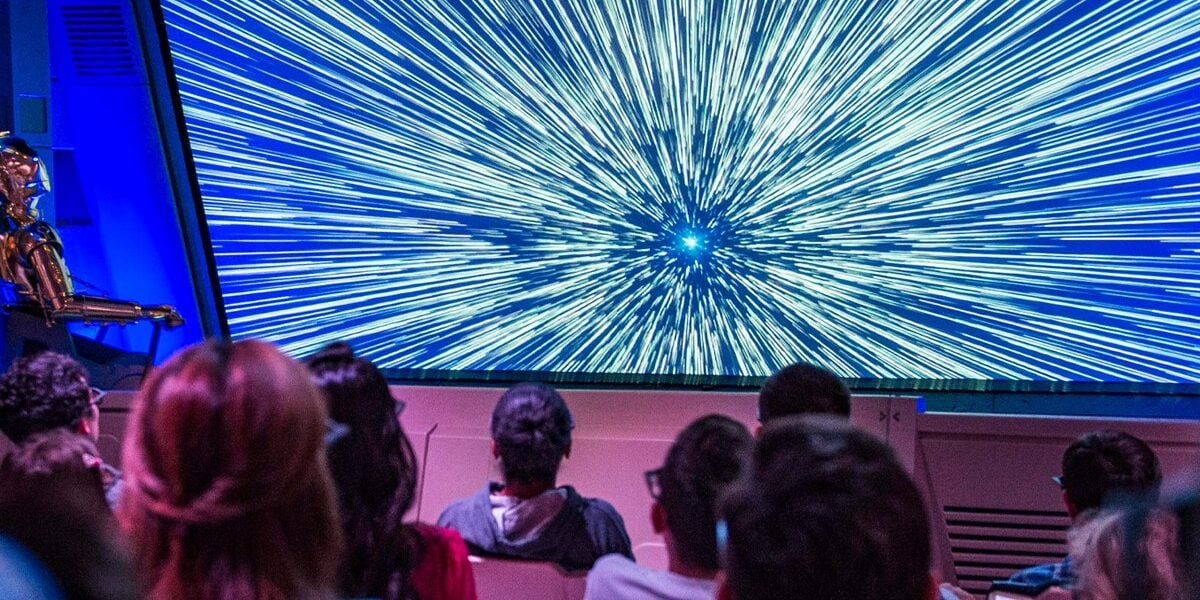
His contributions did not stop there. Iwerks lent his engineering talents to the 1964-65 New York World’s Fair, the in-theater effects of Captain EO, and the projection system behind Star Tours. He often described EPCOT and the World’s Fair as the high points of his career, pointing to the nine-screen Circle-Vision theaters and the rear-projection storytelling inside The American Adventure as some of the most powerful experiences Disney ever created.
The Movie Magic Behind Mary Poppins
Iwerks also played a key role in one of the most celebrated films Disney ever released. Working alongside his father, he helped refine the sodium vapor process, a specialized camera and optical printer system that allowed live action, painted backgrounds, and animation to blend together seamlessly. That technology powered the groundbreaking visuals of 1964’s Mary Poppins, including the iconic Jolly Holiday sequence, in which live actors danced through a fully animated world. Audiences had simply never seen anything like it.

Honors, Handprints, and a Lasting Disney Legacy
The industry took notice of his life’s work. In 1997, the Academy of Motion Picture Arts and Sciences presented Iwerks with the Gordon E. Sawyer Award for his contributions to large-format and simulated film technology. Disney named him a Disney Legend at the very first D23 Expo in 2009, and his handprints sit beside his father’s at Legends Plaza in Burbank. The two also share a window on Main Street, U.S.A., at Magic Kingdom that reads “Iwerks-Iwerks Stereoscopic Cameras.”

After leaving Disney in 1986, he founded Iwerks Entertainment, producing giant-screen theaters and 3D attractions until the company was acquired by SimEx in 2001. He often credited Walt Disney and his father with instilling a can-do attitude, saying that if you focus on doing truly first-class work, the money takes care of itself.
Disney CEO Josh D’Amaro praised his “heart, ingenuity, and passion” and noted that his innovations delighted generations of fans around the world.
Iwerks is survived by Betty, his wife of 54 years, sons John and Larry, and daughter Leslie Iwerks, the acclaimed documentary filmmaker. He was preceded in death by his daughter Tamara. His magic, however, still surrounds us. Sometimes on all sides at once.