 Disney Tips Your Guide To A Great Disney Vacation

Shiver me timbers, Disney just completely rewrote the theme park playbook.
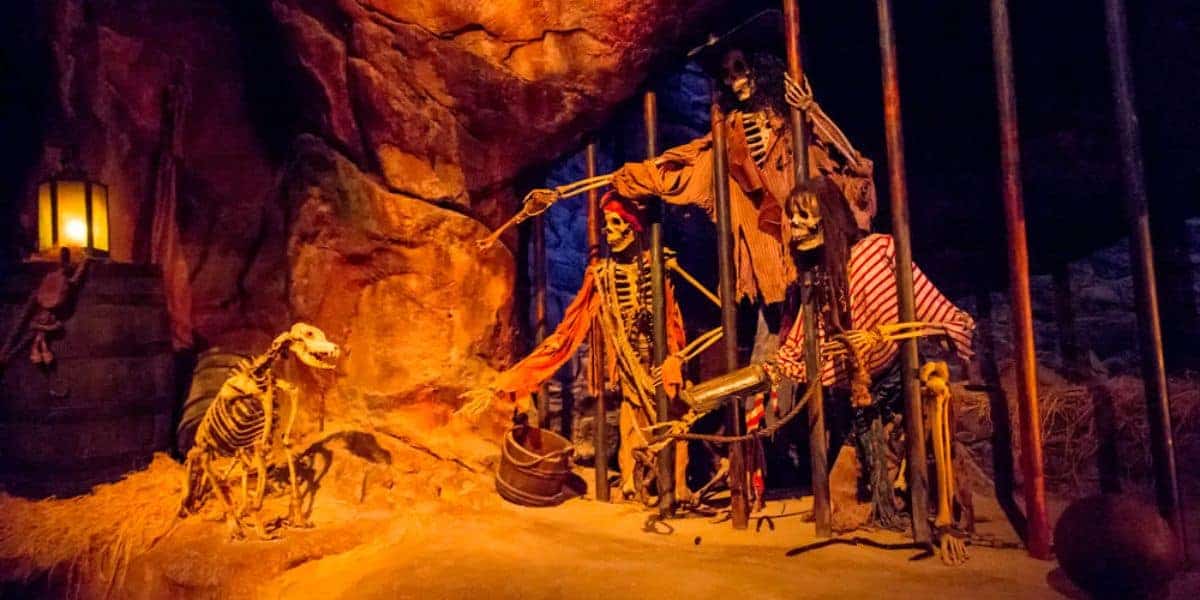
Today, June 26, 2026, Disneyland’s legendary Pirates of the Caribbean attraction officially reopened its gates to guests after a standard-looking refurbishment that began in early May. But as boats drifted into the dark caverns of Dead Man’s Cove, riders were greeted by a mind-bending piece of secret technology: a hybrid, transforming Audio-Animatronic figure that turns an iconic skeleton into a living, breathing, morphing pirate.
This groundbreaking addition marks the first time Walt Disney Imagineering has deployed custom 3D printing and real-time graphics software to execute a physical, live-action metamorphosis inside a classic ride.
The Endless Curse of the Treasure Hoard
The figure in question sits atop the famous mountain of gold coins in the ride’s early cave sequence. For nearly sixty years, this skeleton was a static, macabre prop. Now, it is an active participant trapped in an endless, supernatural loop.

As your boat passes the hoard, you see a living pirate marveling at his loot. He picks up a cursed coin, and right before your eyes, his face seamlessly melts into a fleshless, hollow-eyed skull. Terrified by the hex, he drops the coin to break the spell, instantly reverting to human form—only for his insatiable pirate greed to take over all over again.
The Magic of 3D Printing and Projection Mapping
How did Disney pull off a live physical transformation without any screens, hidden camera cuts, or sudden strobe lights? The answer lies in a cutting-edge marriage of 3D printing and spatial projection mapping.
While the animatronic body uses classic mechanical engineering to handle fluid arm and torso movements, the character’s head is a rigid, hyper-detailed 3D-printed shell featuring absolutely zero moving parts. Instead of mechanical motors twitching flexible rubber skin, a high-fidelity projection system maps lifelike expressions—and the subsequent skeletal decay—perfectly onto the 3D-printed surface.
Driven by a real-time game engine, the digital assets align seamlessly with the face’s physical geometry. The illusion appears completely solid to the human eye, preserving the texture of human skin until the software commands the flesh to wither away.
Insights from the Imagineering R&D Lab
Developed behind closed doors in Imagineering’s Research & Development division, this project represents a massive leap forward. Leslie Evans, Executive R&D Imagineer, explained that the team was specifically hunting for a classic story element where they could execute a stunning visual transformation.
“When you really had animatronic technology, real-time game engines, and incredible CG assets all together… that’s when we said, wait, we’ve really got something here,” Evans noted. She emphasized that the futuristic upgrade serves a pure storytelling purpose: “We want them to believe it’s real… We don’t build technology for technology’s sake. Everything is about telling a great story to our guests.”
A Maintenance Masterpiece
Beyond the pure visual wow-factor, this 3D-printed hybrid solves a massive operational headache. Traditional animatronic faces rely on flexible silicone skins pulled over delicate micro-motors. Over time, constant movement causes the rubber to tear and the hydraulics to leak.
By using a static, rigid 3D-printed face paired with advanced software, Disney has eliminated the most fragile mechanical failure points. Expressions, skin tones, and lighting can be tweaked digitally in a game engine overnight, keeping the ride running smoothly without costly physical teardowns.
As Pirates of the Caribbean begins its next chapter today at Disneyland, it proves that Disney’s drive to innovate never stops. The next time you float through the caverns, keep your eyes on the treasure—you’ll be looking directly at the shape-shifting future of theme park technology.