 Disney Tips Your Guide To A Great Disney Vacation

Disneyland Paris exists in a relationship with its surrounding region that most guests never think about. The resort is a theme park, yes, but it is also a real community embedded in the broader geography of the Île-de-France, the region that encompasses Paris and the areas surrounding it. The cast members who run the park live in local towns. The infrastructure that supports the resort connects to the same roads and rail lines used by everyone else in the region. When something significant happens in the area around Disneyland Paris, the resort is not insulated from it. It is part of it.

This week, something significant is happening about an hour’s drive from the resort, and Disneyland Paris is responding as a neighbor as much as a theme park.
DLP Report shared video on social media showing Disneyland Paris dispatching a fire engine and six cast members to the Fontainebleau forest, where a massive wildfire has been burning and prompting evacuations, road closures, and widespread disruption across a region already stretched by an ongoing heatwave. The caption read: “Video: the Disneyland Paris Fire Department has dispatched a fire engine and 6 Cast Members to Fontainebleau, joining the efforts to control a massive wildfire about an hour drive away from the Resort.”
Video: the Disneyland Paris Fire Department has dispatched a fire engine and 6 Cast Members to Fontainebleau, joining the efforts to control a massive wildfire about an hour drive away from the Resort (via BFMTV) pic.twitter.com/kp2WMpYvyv
— DLP Report (@DLPReport) July 13, 2026
The Fontainebleau forest fire is not a distant regional story. It is unfolding in a location with deep historical significance and genuine proximity to Paris, and its effects are rippling across the transportation network and the broader atmosphere of the region.
The Scale of What Is Happening at Fontainebleau
The Fontainebleau forest sits approximately 42 miles south of Paris, making this fire unusual for a major wildfire in France. The region is home to the Fontainebleau Château, favored by Napoleon, and is a popular destination for visitors from Paris and across Europe.
French President Emmanuel Macron described the fire as being of “exceptional scale” and said all necessary means were being deployed to fight it. Two water-dumping planes were dispatched over the area along with hundreds of firefighters. Regional fire service spokesman Paul Laurain confirmed the deployment to public broadcaster France-Info.
The situation on the ground remains serious. The initial fire is still not fully contained and has been spreading at a moderate rate. A second fire broke out in another section of the forest while the first was still active. Pierre Ory, the head of the regional administration, told French media that an investigation is underway and that arson is being considered as a possible cause.
The fire’s behavior is being complicated by atmospheric conditions. “Winds are turning, which is significantly complicating the work of the firefighters,” Ory added. That kind of shifting wind pattern is exactly what makes large wildfires difficult to contain and what leads to rapid spread even when resources are deployed at scale.
The effects are spreading beyond the forest itself. Trains to and from Paris’s Gare de Lyon station were disrupted late Sunday before beginning to normalize Monday morning. A section of the busy A6 highway leading southeast out of Paris was shut down due to fire risk, affecting one of the main corridors connecting Paris to the surrounding region.
The Broader European Context
The Fontainebleau fire is not happening in isolation. It is one of several major wildfires currently burning across western Europe during what France is describing as the peak of its third red-alert heatwave of the summer. Temperatures have surpassed 40 degrees Celsius across western and central France and sit around 37 degrees in Paris. That heat, combined with dry conditions and shifting winds, is creating conditions where fires spread faster than firefighting resources can respond.
In southern France, large fires have already scorched thousands of acres since last week, including blazes serious enough to disrupt the Tour de France cycling race and stretch regional firefighting capacity across the country.
In Spain, the situation has been even more deadly. A wildfire ripped through a remote southern community last week, killing 13 people in one of the country’s deadliest blazes. A 93-year-old British national died Sunday in a hospital from injuries sustained in the Los Gallardos fire, bringing the death toll to that number. Spanish Prime Minister Pedro Sanchez was expected to visit the site Monday. Ten people remained unaccounted for as of Monday.
What This Means for Disneyland Paris Guests
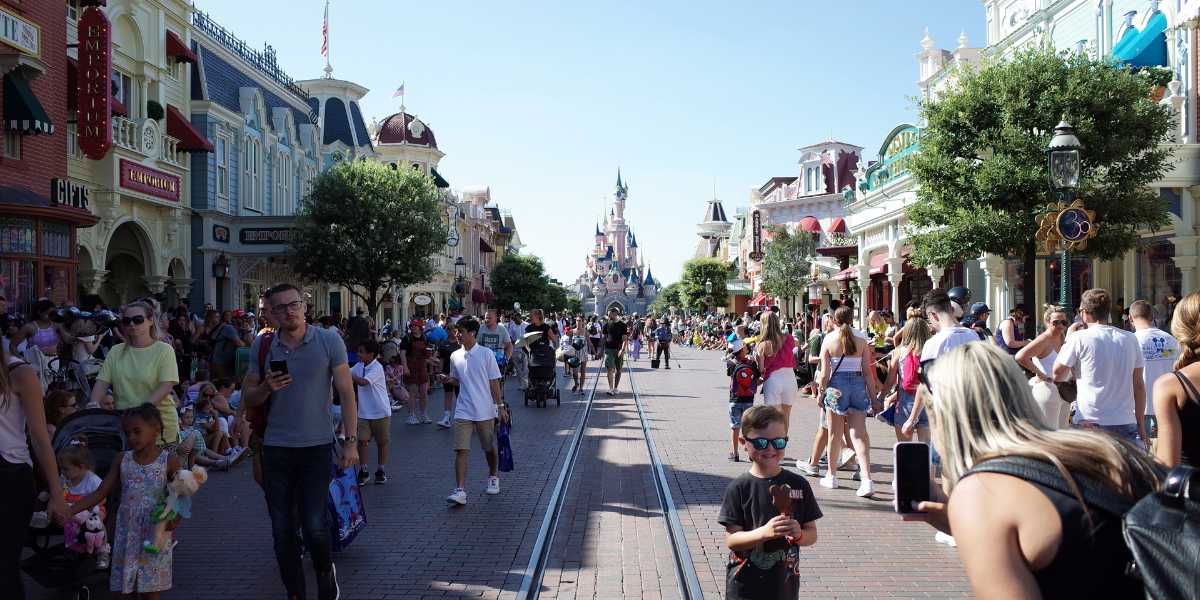
For guests currently visiting or planning to visit Disneyland Paris, the immediate and most important question is whether the resort itself is affected. Based on current information, the resort is operational and the wildfire is roughly an hour’s drive away. The dispatch of the resort’s fire department to assist at Fontainebleau is a community response rather than a sign that the resort itself is at risk.
That said, the heatwave affecting the region is very much present at the resort. As has been covered extensively this week, Disneyland Paris has been operating under a fireworks ban imposed by local authorities due to the extreme fire risk created by the heat. The fireworks ban runs through July 15. The resort has responded by reintegrating drones into Disney Tales of Magic, but the pyrotechnic elements of the nighttime spectaculars remain suspended while the ban is in effect.
The heat itself remains the primary factor shaping the day-to-day guest experience at Disneyland Paris this week. Outdoor attractions have been affected in previous stretches of this summer’s heatwaves, and the same precautions apply now: morning starts before peak heat, indoor breaks during the hottest afternoon hours, and consistent hydration throughout the day.
If you are visiting Disneyland Paris this week and you have seen any impact from the regional wildfire situation on travel to or from the resort, share what you experienced in the comments. And if you are planning a trip in the coming days, drop your questions below. The situation on the ground is evolving quickly enough that real-time guest reports are some of the most useful information available right now.