 Disney Tips Your Guide To A Great Disney Vacation

The Walt Disney World Monorail is the quintessential symbol of a vacation in “The Most Magical Place on Earth.” It is designed to be a sleek, effortless “Highway in the Sky.” But on April 4, 2026, the magic didn’t just fade—it shattered.

In a dramatic mechanical failure that has gone viral across social media, Monorail Teal suffered a catastrophic power loss while traversing the EPCOT beam. As reported by BlogMickey, the resulting “greenhouse effect” inside the windowless cabins became so unbearable that guests were forced to take the extreme measure of ripping out the emergency windows just to breathe.
From “Magic” to “Meltdown” in Minutes
The incident occurred during the peak afternoon heat, a time when Central Florida temperatures often hover in the high 80s. In a Mark VI monorail, the air conditioning is entirely dependent on the train’s electrical power. When Monorail Teal went dark, the cooling system died instantly.

Within minutes, the stagnant air became a safety hazard. Passengers, including families with small children, reported a rapidly rising sense of panic as the cabins turned into high-altitude ovens. Due to the power failure, the pilot provided no communication, so guests used the emergency release tools to pop the glass panes from their frames.
Footage from the scene showed a surreal sight: the iconic Monorail Teal being towed back to the Transportation and Ticket Center (TTC) with gaping holes where the windows should be, as exhausted guests leaned out to catch the breeze.
A Pattern of Failure: The Ghost of 2025
While the “Teal Crisis” is the latest headline, it is part of a worrying trend for Disney’s aging transportation infrastructure. This breakdown comes just five months after a terrifying electrical fire in November 2025.
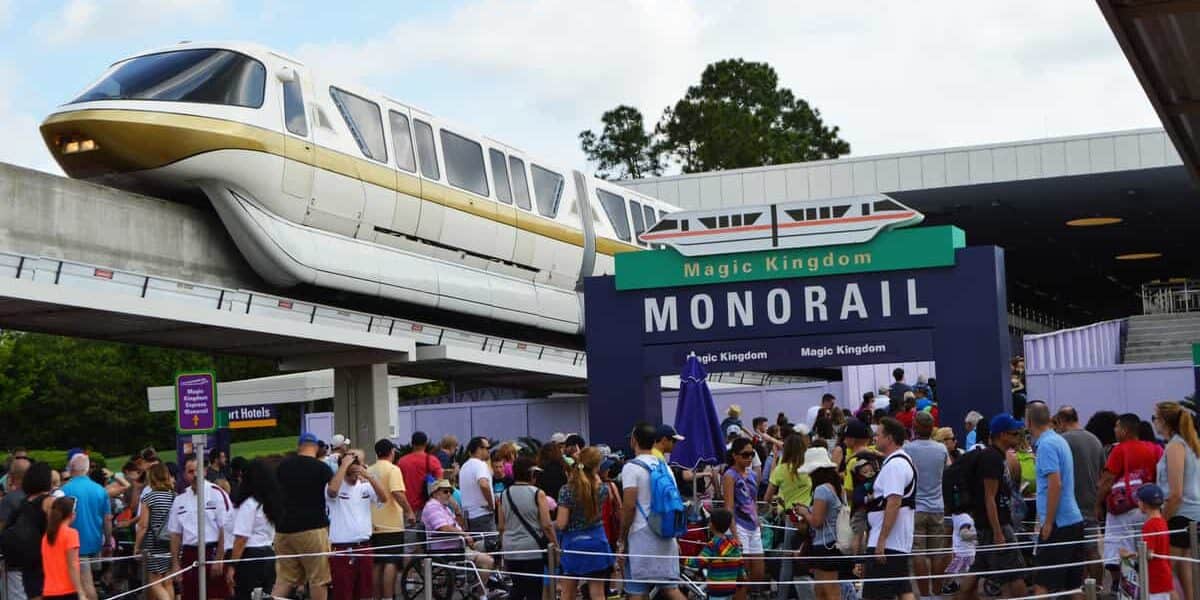
As documented by Inside the Magic, that “code red” incident forced a total evacuation of the monorail area after smoke began billowing from the tracks near the Grand Floridian. The fire necessitated a resort-wide shutdown and a massive logistical scramble. The common thread between the November fire and the April 2026 window removal is clear: the Mark VI fleet is struggling to survive.
The 37-Year-Old “Duct Tape” Fleet
The heart of the problem is a simple number: 37. The current Mark VI monorails entered service in 1989. By 2026, these trains will have been operating for nearly a decade past their intended “retirement” age.

Disney has attempted to mask the fleet’s decline with “two-phase refurbishments,” adding fresh paint and glowing retro-style logos. However, as guests on Monorail Teal discovered, a fresh coat of paint cannot fix a failing electrical core. The reliability of the system has also become a political lightning rod; since the transition to the Central Florida Tourism Oversight District (CFTOD), the monorail has been subject to increasingly rigorous state-mandated safety inspections.
Survival Tips: If You’re Stranded in the Sky
While the monorail remains statistically safe, the recent “Teal Meltdown” proves that guests should stay alert:

- Locate the Vents: Small emergency vents near the ceiling can be manually opened for airflow.
- Stay Hydrated: Always carry water; in a stalled cabin, heat exhaustion can set in within ten minutes.
- Use Your Mobile Device: If the onboard intercom is dead, call Disney Security or 911 immediately.
Conclusion: A Crossroads for the Icon
As Monorail Teal was towed away with its windows missing, it served as a stark visual metaphor for the current state of Disney World transit. The magic is still there, but it is being held together by the heroic efforts of maintenance teams and, occasionally, the desperate actions of guests. For Disney to protect its legacy, the time for “duct tape” repairs has passed—the “Highway in the Sky” needs a total overhaul before the next Florida summer hits.