
 Disney Tips Your Guide To A Great Disney Vacation
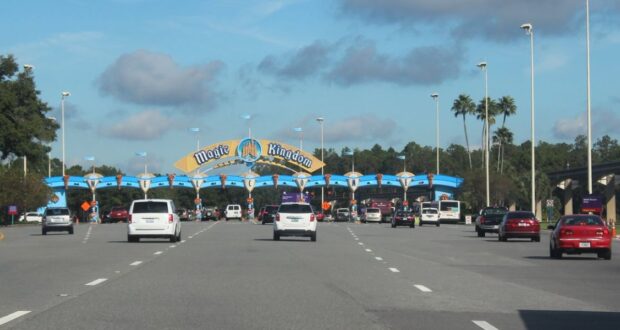
Summer 2026 was supposed to be the “year of the expansion,” with new lands and attractions drawing record crowds to Florida and California. Instead, the “Most Magical Place on Earth” is facing a very earthly problem: a global energy crisis. As the conflict with Iran escalates and the Strait of Hormuz remains a geopolitical flashpoint, the national average for gasoline is flirting with $7.00 per gallon.

Industry veteran Robert Niles, writing for the OC Register, recently sounded the alarm, noting that these surging prices signal a “rough summer” ahead for the theme park industry. It’s no longer just about the price of a ticket; it’s about whether families can afford the literal fuel required to reach the front gate.
The Death of the “Easy” Road Trip
For decades, the regional theme park—think Cedar Point, Kings Island, or Six Flags—has been the ultimate “budget” vacation. You pack the car, drive four hours, and spend a weekend riding coasters. But in wartime, “budget” is a relative term.

At $7.00 a gallon, a standard SUV with a 20-gallon tank now costs $140 to fill up. For a family driving from Atlanta to Orlando, the fuel cost alone could easily top $400 round-trip. When you add Disney’s $35-a-day parking fee, the “commute” to the magic is becoming more expensive than the park admission itself. As Niles points out, this puts the “drive-to” market in a death spiral. Families aren’t necessarily staying home, but they are cutting their trips from three days to one, or skipping the park-hopper upgrades to save for the drive home.
The Jet Fuel Jolt: Orlando’s Elite Pivot
While regional parks are sweating over minivans, Walt Disney World and Universal Orlando Resort are watching the aviation charts. The war with Iran has sent jet fuel prices into a vertical climb, forcing airlines to tack on aggressive “fuel surcharges.”
For a family of four flying from the West Coast or the Midwest, airfare has effectively doubled in the last six months. This shift is turning destination theme parks into “elite-only” enclaves. We are seeing a noticeable “softening” in mid-tier hotel bookings, while luxury villas remain full. The middle-class family, long the backbone of Disney’s bottom line, is being priced out by a combination of high-altitude fuel costs and ground-level inflation.
The “Churro Inflation” and Hidden Costs
The pain doesn’t stop at the parking lot. Every single item sold in a theme park—from the iconic Dole Whip to the latest Star Wars lightsaber—arrives via a diesel-burning semi-truck.

As shipping costs skyrocket, those expenses are being passed directly to the guest. We’ve entered the era of the $12 churro and the $22 quick-service burger.
- Supply Chain Surcharges: Many parks are quietly raising food and beverage prices monthly to cover delivery costs.
- Labor Pressure: Cast Members and employees, struggling with their own $7-a-gallon commutes, are pushing for higher wages, further tightening the parks’ operating margins.
The Rise of the “Ultra-Local” Staycation
If there is a winner in this energy crisis, it’s the small, local water park or family fun center. As Robert Niles suggests, the “Staycation” is back with a vengeance. We are seeing record sales for local season passes at parks within 50 miles of major metropolitan areas. Families are trading the $6,000 Orlando odyssey for a $500 summer of unlimited visits to their local “backyard” park.

Conclusion: A Season of Reckoning
The 2026 theme park season will be a litmus test for the industry’s resilience. While the “war with Iran” is a factor no CEO could have fully planned for, the result is a massive shift in how Americans consume entertainment.
As we head into the peak of July, the question isn’t whether the rides are running—it’s whether the guests can afford to get to them. For now, the “Magic” is still there, but it’s carrying a heavy “War Surcharge.”




But when things even out after the Iran war is calmed down and gas prices start to drop, will prices start to drop too? I doubt they will. As happened with Covid, prices went up and never came down. Like shopping we’ve seen prices rise and rise. Went shopping the other day a can of food we used to pay $.49 for is now $1.59.