 Disney Tips Your Guide To A Great Disney Vacation
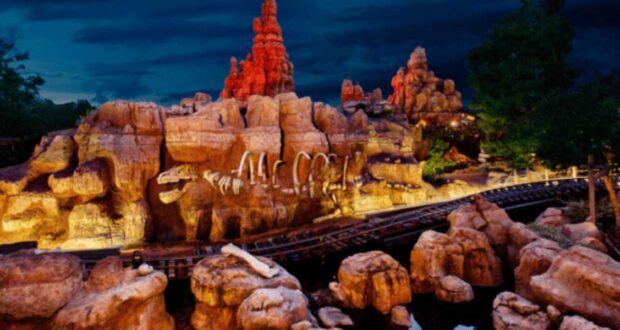
For nearly half a century, Big Thunder Mountain Railroad has been the pulse of Frontierland. It is a masterclass in the “family-thrill” category—a ride that feels like it’s moments away from flying off the rails without ever actually scaring away the kids.

However, as the Magic Kingdom counts down to the attraction’s grand reopening on May 3, 2026, a wave of “Main Street hysteria” has taken over social media. Following the release of viral testing footage captured earlier this week, fans are up in arms, claiming the ride looks significantly slower than it did before its major refurbishment.
But before you start mourning the loss of the “wild” in the wilderness, it’s time to take a breath and look at the physics behind the footage. While the “eye test” might make the train look like a snail, the reality is that Disney Imagineering is currently operating exactly as it should.
The “Slow” Illusion: Why Physics Matters
The viral video that sparked the panic shows a Big Thunder train cresting its second lift hill and navigating the subsequent spiral at what appears to be a leisurely pace. Comment sections were immediately filled with accusations that Disney has “neutered” the ride or added new trim brakes to reduce track wear.
However, there is a massive variable that the “eye test” fails to account for: Mass.
In the world of roller coaster physics, momentum (p) is a product of mass (m) and velocity (v):
p = mv
When guests see Big Thunder testing right now, they see empty trains. A fully loaded Big Thunder train carries between 30 and 40 passengers. If you estimate an average weight of 150 lbs per person, a loaded train is carrying an extra 4,500 to 6,000 pounds of momentum-generating weight.
Gravity is the only engine a coaster has once it leaves the lift hill. A train weighing 3 tons has significantly more potential energy to “plow” through friction and wind resistance. An empty train is light and “floaty,” making it much more susceptible to the drag of the track and the air. What looks like “crawling” in a video is simply what a lightweight train looks like when it isn’t being pushed by 40 screaming guests.
The “Break-In” Period and the Smoothness Factor
Beyond the weight, we have to consider the hardware. The 2026 refurbishment wasn’t just a fresh coat of paint; it involved replacing the entire track in several high-stress sections.

- New Steel and Grease: Brand-new track is “stiff.” The bearings haven’t reached their optimal operating temperatures, and the grease hasn’t been “worked” through thousands of high-speed cycles yet.
- The Smoothness Illusion: The old track is bumpy. Vibration creates a tactile sensation of speed—your brain thinks you’re going faster because you’re being tossed around. The new, laser-aligned track is smooth. Just like a luxury car feels “slow” at 70 MPH compared to an old Jeep, the new Big Thunder will feel smoother, which many guests mistakenly interpret as “slower.”
The Verdict: Wait for May 3
Disney has no incentive to slow down one of its highest-capacity headliners. A slower ride means fewer guests per hour, which leads to longer lines and lower guest satisfaction scores.
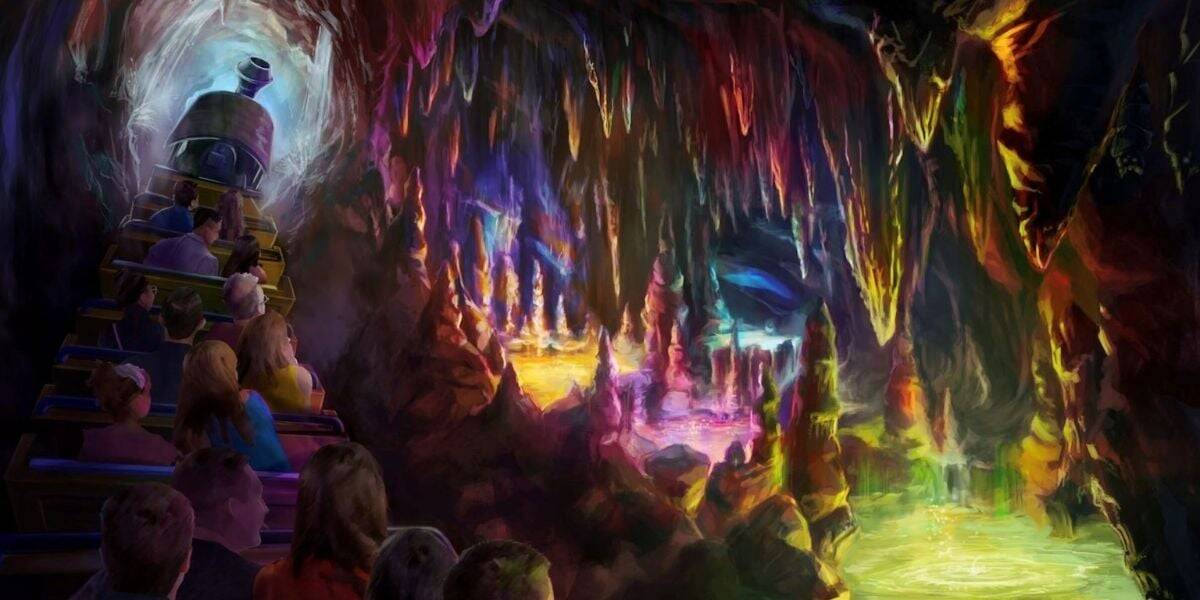
In the coming weeks, Imagineers will begin testing with “water dummies”—large containers filled with water to simulate the weight of a full load. If you were to time those runs, you’d see the “whip” and the “snap” of the classic Big Thunder experience return instantly.
We will know for certain when the construction walls come down on May 3, 2026. Until then, don’t let a five-second clip of an empty train ruin your excitement. The Wildest Ride in the Wilderness isn’t being tamed—it’s just getting a brand-new set of bones.
Are you planning to be there for the May 3 reopening? Do you prefer the “rattle” of the old track or are you excited for a smoother ride? Let us know in the comments!