 Disney Tips Your Guide To A Great Disney Vacation

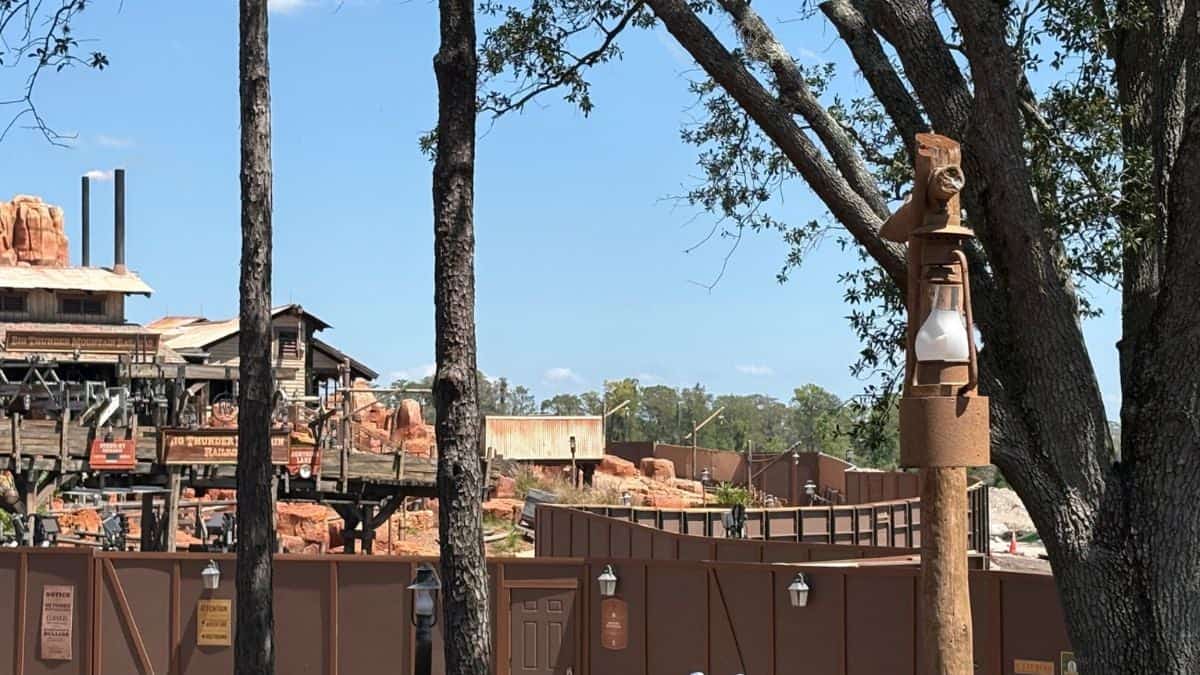
Walt Disney World is facing an undeniable capacity problem. Standby wait times are climbing, walkways are increasingly congested, and the demand for a day inside the Magic Kingdom has never been higher. While Disney has promised incredible, long-term relief with the massive additions of Villains Land and a Cars franchise takeover in Frontierland, those ground-up expansions are years away from welcoming their first guests.
So, what can Disney do right now to ease crowd congestion?
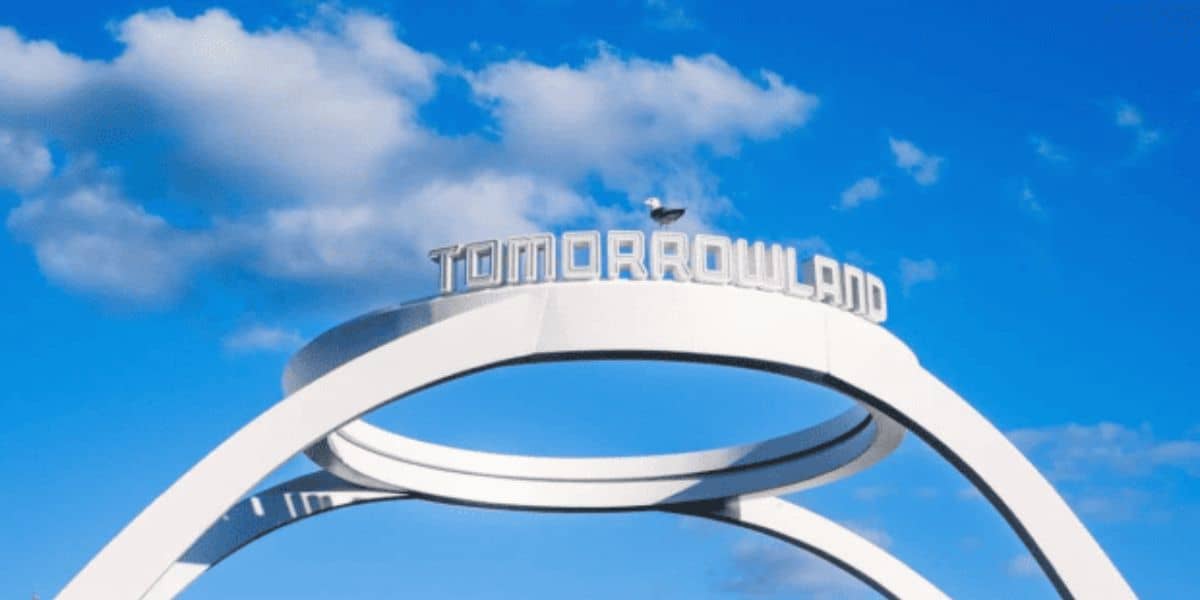
The fastest path to relief doesn’t require clearing uncharted Florida forests beyond the park’s railroad tracks. Instead, the ultimate fix is hiding in plain sight beneath the neon signs of Tomorrowland.
By activating the completely vacant show building that once housed Stitch’s Great Escape and replacing or radically reimagining the massive Tomorrowland Speedway, Walt Disney Imagineering could instantly inject vital crowd capacity back into the park’s ecosystem.
1. The 8-Year Vacancy: The Abandoned Stitch Building
To understand the sheer scale of wasted potential inside the Magic Kingdom, you only need to look at the massive, dormant show building sitting directly across from the Monsters, Inc. Laugh Floor.

This premier double-theater complex was historically a foundational “people-eater” for the park. Over the decades, it successfully cycled thousands of guests per hour through various iterations, including Flight to the Moon, Mission to Mars, the terrifying ExtraTERRORestrial Alien Encounter, and finally, Stitch’s Great Escape! in 2004.
While the Stitch overlay divided fans due to its intense sensory mechanics and infamous chili-dog burp effect, the ride executed a vital operational task: it pulled up to 1,000 guests per hour off the hot asphalt and into an air-conditioned indoor environment.
Since the attraction permanently closed, this prime piece of theme park real estate has sat completely vacant. Aside from the Tomorrowland Transit Authority PeopleMover gliding directly through its upper rafters—offering riders a brief glimpse into a pitch-black, hollowed-out room—the venue functions as little more than a seasonal character greeting alcove.
Leaving a dual-theater infrastructure empty in the world’s most heavily visited theme park is an incredible operational oversight. Imagineering wouldn’t need to pour a new foundation or build an external shell to fix this. The structural walls, internal wiring, and queue pathways are fully intact and waiting to be utilized for a modern dark ride or simulator.
2. Reclaiming the Real Estate: The Speedway Dilemma
If the Stitch building represents a failure to utilize existing indoor structures, the Tomorrowland Speedway represents a failure to maximize the value of premium physical land.
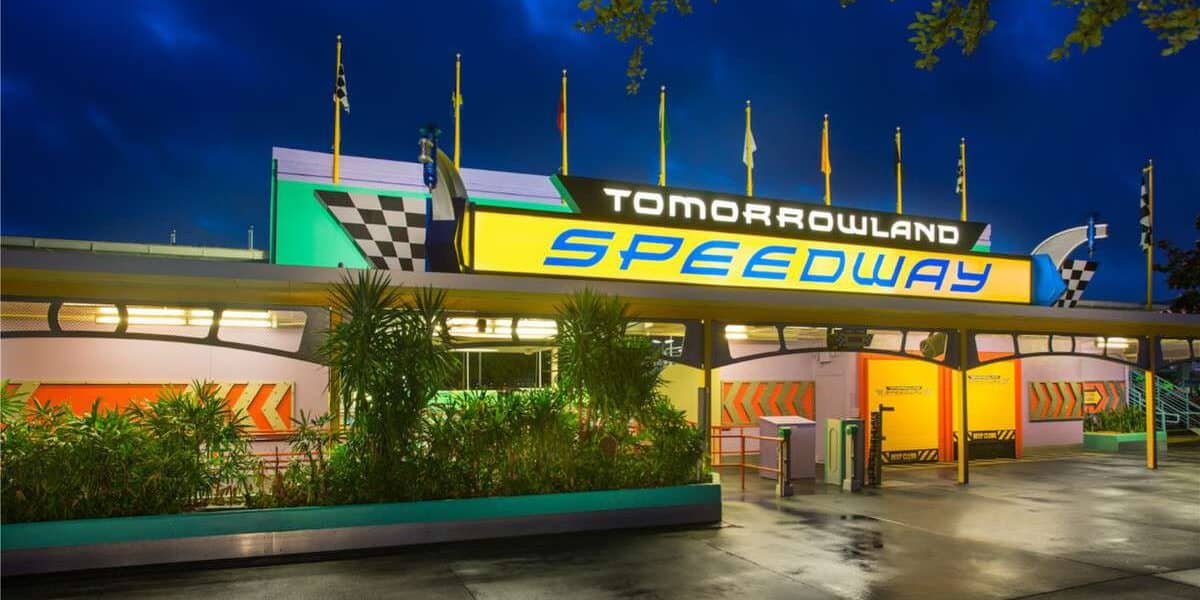
Opening alongside the park on October 1, 1971, the Speedway holds immense historical significance. For generations of young children, steering a “real” car for the first time has been a quintessential childhood milestone. But today, the ride’s current format feels profoundly out of step with Tomorrowland’s thematic goals and the park’s logistical realities.
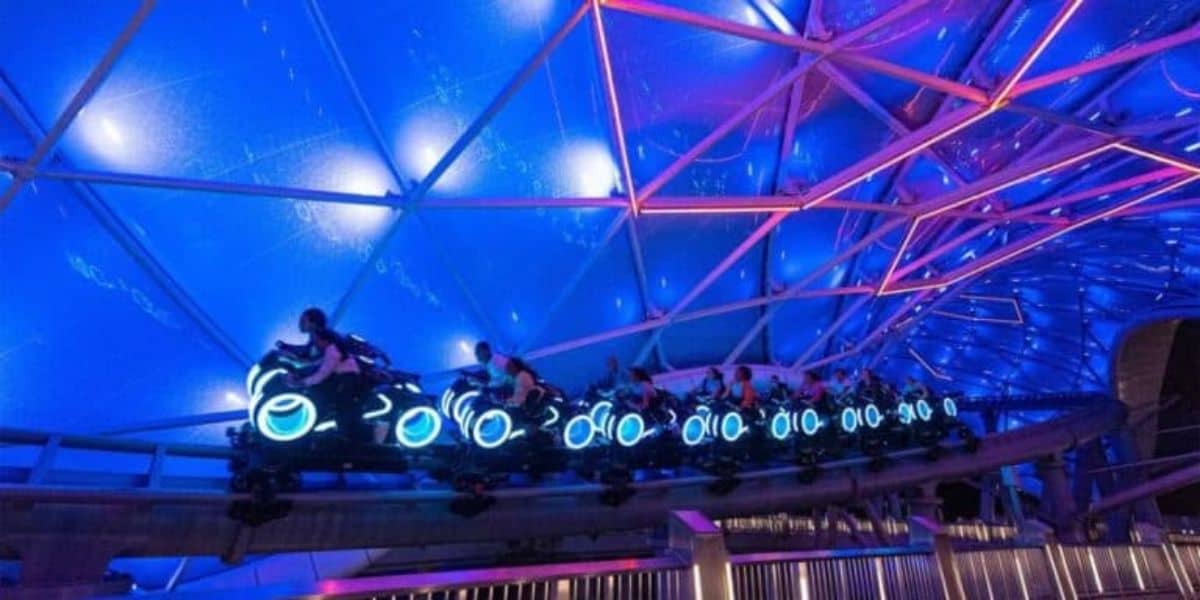
The Tomorrowland Speedway occupies roughly five acres of prime theme park real estate, wedged directly between the Mad Tea Party in Fantasyland and the ultra-sleek TRON Lightcycle / Run plaza.
When evaluated from a capacity-to-footprint ratio, the math simply fails. The attraction demands a massive amount of physical space while yielding a remarkably low hourly guest throughput due to slow loading times, strict spacing requirements, and frequent operational delays.
Furthermore, the ride’s loud, gas-guzzling internal combustion engines emit constant noise pollution and a strong exhaust smell—a direct aesthetic conflict with the clean-energy, high-tech vibe anchored by TRON next door.
Replacing or radically downsizing the Speedway is the ultimate move to future-proof the land. The acreage currently consumed by the track is large enough to house a massive indoor steel coaster or a cutting-edge trackless dark ride.
Alternatively, Disney could execute a “Speedway Swap”: transitioning the ride to a vertically stacked, high-efficiency electric vehicle (EV) racing layout. This would preserve the nostalgic driving attraction for families while freeing up over half the land for a brand-new, high-capacity E-ticket attraction.
The Verdict
Disney is ready to spend billions expanding outward. But immediate relief doesn’t require waiting out half-decade expansion timelines. The structural foundations for immediate capacity relief are already built. By unlocking the dormant Stitch theaters and replacing the land-heavy Speedway, Imagineering can fix Magic Kingdom’s current bottlenecks and deliver a true “Tomorrow” today.