
 Disney Tips Your Guide To A Great Disney Vacation
From the galaxy far, far away to Isla Nublar, the era of the legacy sequel has been as turbulent as it has been expensive — and the numbers are finally starting to tell the full story.

Credit: Lucasfilm
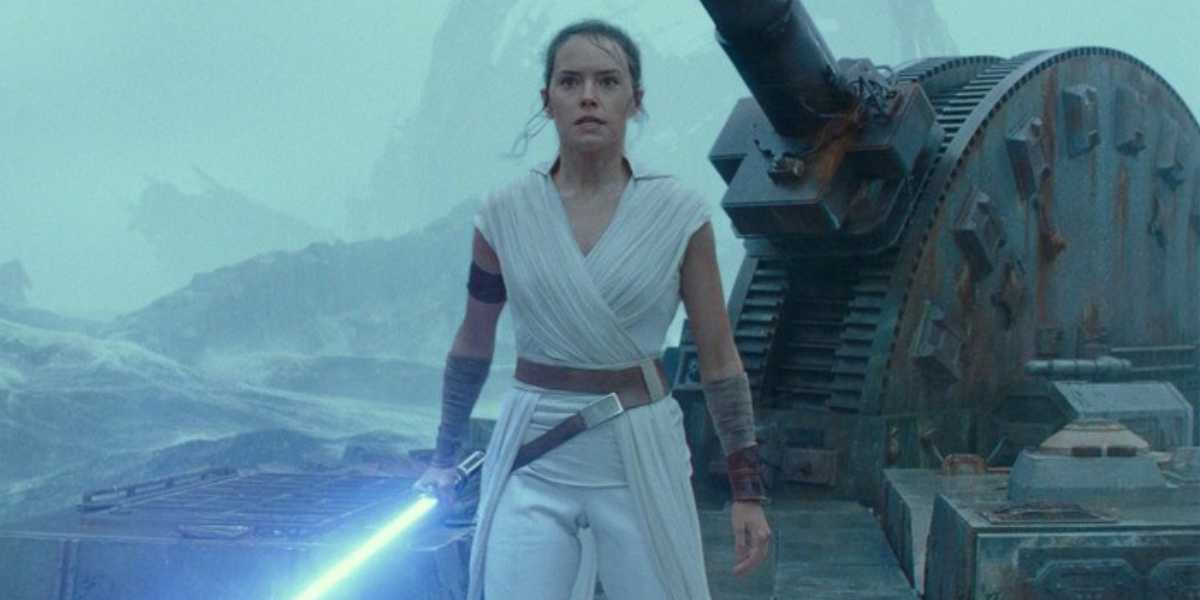
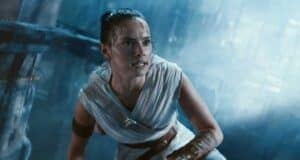
When Disney acquired Lucasfilm in 2012 for $4 billion, the promise was electrifying: a new Star Wars trilogy, a new generation of heroes, and a universe of storytelling possibilities stretching as far as the eye could see. What followed was something rather more complicated. The sequel trilogy — comprising Star Wars: Episode VII–The Force Awakens(2015), Star Wars: Episode VIII–The Last Jedi (2017), and Star Wars: Episode IX–The Rise of Skywalker (2019) — delivered enormous box office returns but left a fanbase bitterly divided.
The Last Jedi in particular became a cultural flashpoint, with Rian Johnson’s bold creative choices splitting audiences down the middle in ways that arguably the franchise has never fully recovered from.
By the time The Rise of Skywalker arrived, and with The Force Awakens‘ director J. J. Abrams back at the helm, it felt less like a triumphant conclusion and more like a franchise desperately trying to find solid ground — course-correcting so aggressively that it ended up somewhere few viewers felt fully satisfied with. The goodwill was there. The execution, for many, simply wasn’t.
Credit: Lucasfilm
Disney’s struggles with Star Wars are not, however, an isolated phenomenon. Legacy franchises attempting to reignite beloved intellectual properties for modern audiences have found the path littered with cautionary tales. The difference between nostalgia as a springboard and nostalgia as a crutch has never been harder to navigate — and few franchises illustrate that tension more vividly than Universal’s Jurassic World series.
Picking up the torch from the original trilogy (the first two directed by Spielberg; the third by Joe Johnston), the Jurassic World films brought back dinosaurs, spectacle, and eventually the original cast, to varying degrees of critical and commercial success.
Like the Star Wars sequels, the trilogy began with enormous promise, delivered blockbuster returns, and ended with a film — Jurassic World Dominion (2022) — that critics largely dismissed even as audiences turned up in significant numbers. Legacy, it seems, guarantees an audience. It does not guarantee a legacy.
What both franchises share, beyond their complicated critical receptions, is an almost unfathomable scale of investment — and it is here that the financial reality of modern blockbuster filmmaking comes into sharp relief. In a new report from Fortune, it has been revealed that Universal’s Jurassic World Dominion has replaced The Force Awakens as the most expensive movie ever made.

Credit: Universal Pictures
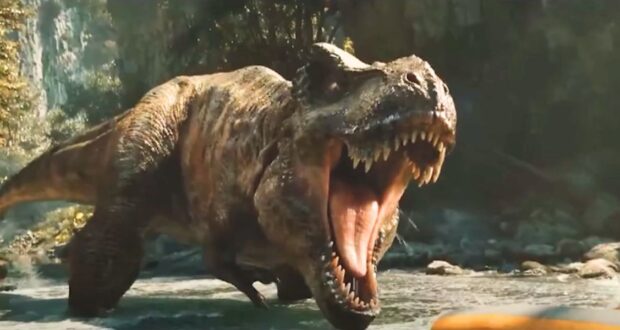
Jurassic World Dominion carries a staggering total production cost of $658.8 million, making it the most expensive movie ever made and the most expensive of the three recent Jurassic World films — ahead of Jurassic World: Fallen Kingdom(2018) at $606.3 million and last year’s soft reboot Jurassic World: Rebirth (2025) at $254.2 million. It clears The Force Awakens‘ $638.9 million easily and replaces Disney’s first sequel trilogy movie at the top.
The eye-watering price tag was inflated by pandemic-era disruptions, including costly safety protocols, months of production delays, and an extended cast quarantine at a luxury English hotel costing upwards of $600 a night. Filming in the UK, however, provided crucial financial relief: Universal claimed $127.8 million in government reimbursements through the UK’s Audio-Visual Expenditure Credit scheme, bringing its net outlay on Dominion down to $531 million.

Credit: Universal Pictures
Dominion‘s near-billion-dollar box office return left Universal with a razor-thin loss on its theatrical run alone, but across all three original Jurassic World films, the studio turned a multi-million dollar profit on a combined $1 billion+ net spend — a margin that would have virtually disappeared without the UK tax reimbursements.
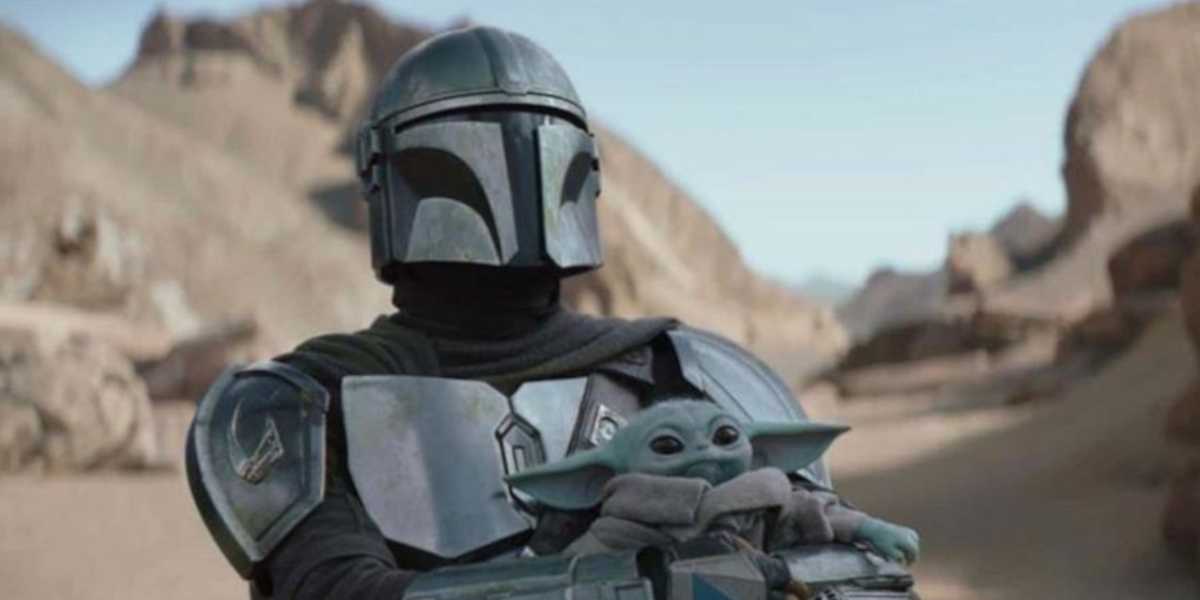
Against that backdrop of nine-figure spending, what makes the next chapter of Star Wars so intriguing is precisely what it is not. The Mandalorian and Grogu, the long-awaited theatrical debut of the beloved Disney+ duo, was produced on a comparatively modest budget (circa $165 million) that stands in stark contrast to the sequel trilogy’s extravagance — a deliberate recalibration that signals Lucasfilm may have learned something from the era of big swings and bigger budgets.
Credit: Lucasfilm
There is a pleasing poetry to it: the characters who arguably saved Star Wars‘ reputation on the small screen are now being trusted to restore it on the big one, without the pressure of an arms-race budget behind them. Further ahead, 2027’s Star Wars: Starfighter promises to open yet another chapter in the universe’s cinematic expansion, with fresh characters and a new corner of the galaxy to explore — another sign that Lucasfilm is finally moving forward rather than endlessly relitigating the past.
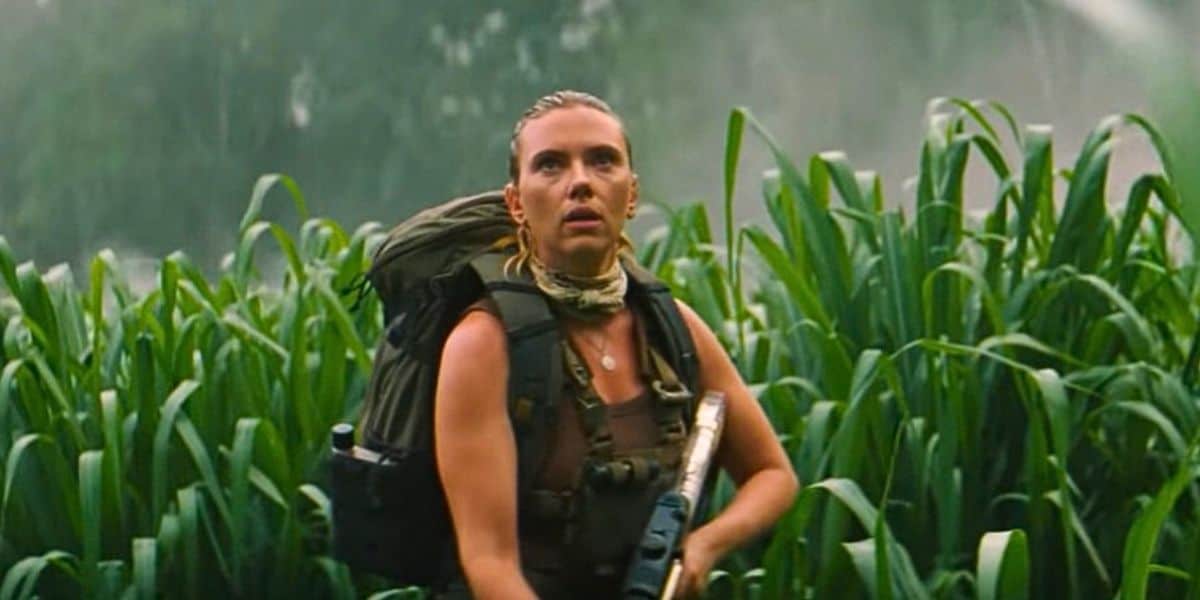
For Jurassic World, meanwhile, the road ahead looks equally promising. Last year’s Rebirth — a leaner, cheaper production that effectively rebooted the franchise with an entirely new cast — demonstrated that audiences are still hungry for dinosaurs, even without the familiar faces of Chris Pratt (Owen Grady) and Bryce Dallas Howard (Clare Dearing). A sequel is already in development, and given how generously the UK’s reimbursement scheme has treated Universal over the years, few would bet against filming returning to British shores once more.
Credit: Universal Pictures
The lesson from both franchises, perhaps, is the same one Hollywood keeps having to relearn: spectacle alone does not make a saga. Story does. And sometimes, doing more with less is the biggest creative risk of all.
What are your thoughts on the big money spending in Hollywood? Let us know in the comments down below!



It took years for the Star Wars audience to keep coming back for more (movies). The actors had characters we got to know. That’s not the same as the new Star Wars movies. What may have been seen on Disney+ is not what everyone else saw. Disney+ had its own bought (paid) audience. It seems those making the movies didn’t keep that in mind; the new series is only seen by those who paid to see it grow, with a limited office.
Maybe the creators of future Star Wars movies should sit back, watch the (old) movies from the beginning, and see what the audience came back to see when a new movie came out.