 Disney Tips Your Guide To A Great Disney Vacation

For thousands of families packed into Walt Disney World Resort, a typical afternoon quickly turned into an operational standstill. A severe summer thunderstorm system swept through Central Florida, slamming the property with torrential downpours, high winds, and a relentless barrage of cloud-to-ground lightning.
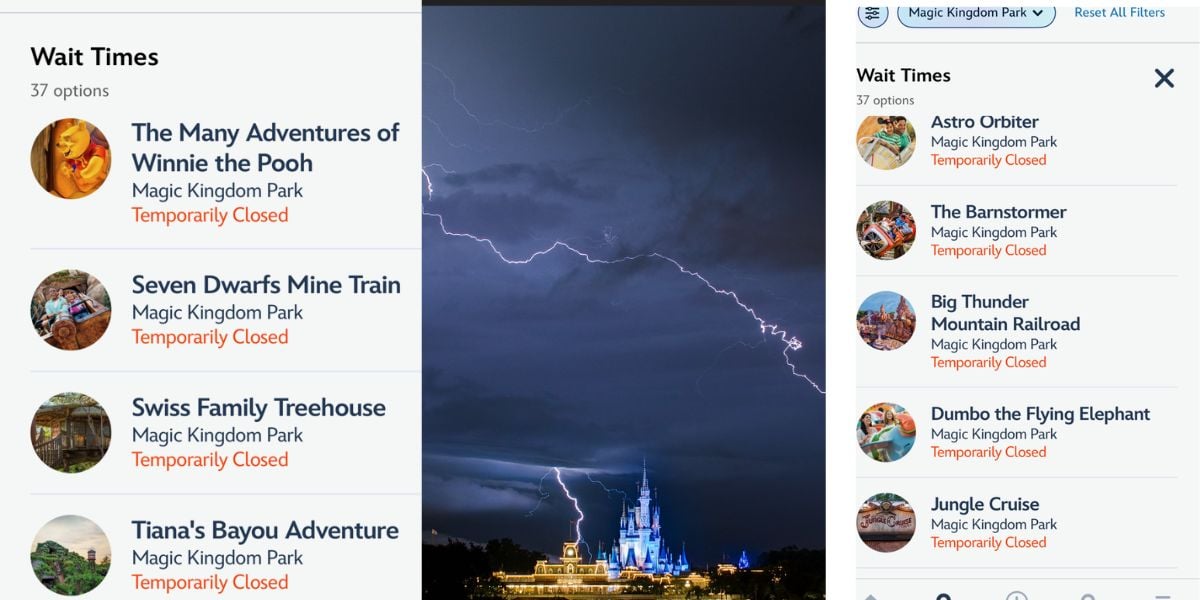
The tempest forced the simultaneous closure of dozens of attractions across the property, turning the world’s premier vacation destination into an exercise in patience and crowd management.
Because Disney maintains strict, non-negotiable safety protocols regarding weather proximity, every single outdoor and open-air attraction across all four theme parks was mandated to shut down operations instantly. At the height of the deluge, prominent theme park expert and digital creator Drew Smith (@DrewDisneyDude) took to X (formerly Twitter) to document the weather emergency. His viral live update showcased ominous, pitch-black skies completely swallowing Cinderella Castle, warning holiday travelers to seek shelter immediately as severe weather slammed the resort.
Magic Kingdom’s Outdoor Grid Goes Dark
While all four Walt Disney World theme parks suffered from the storm’s wrath, Magic Kingdom Park took the brunt of the operational strain. Due to its classic layout, Magic Kingdom features a high concentration of outdoor and open-air attractions. Within a matter of minutes, a staggering number of major rides went completely dark as the storm cells hovered directly over Tomorrowland, Fantasyland, and Frontierland.
High-capacity outdoor thrill rides were the first to clear their queues under Disney’s automated weather protocols:
- Big Thunder Mountain Railroad
- Seven Dwarfs Mine Train
- The Barnstormer
As hundreds of rain-soaked guests were hurried out of line, the outdoor closures rapidly cascaded into gentler family staples and open-air transit systems. The Tomorrowland Speedway, Astro Orbiter, Dumbo the Flying Elephant, The Magic Carpets of Aladdin, Swiss Family Treehouse, and the Walt Disney World Railroad all posted “Temporarily Unavailable” statuses on the My Disney Experience app. Even the iconic Jungle Cruise was forced to tie up at its docks, as operating watercraft during an electrical storm presents an immediate hazard.
Resort-Wide Weather Standstill
Beyond the borders of Magic Kingdom, the severe weather cell systematically choked off outdoor ride capacity across the remaining three theme parks:

- EPCOT: Operations were halted at the high-speed Test Track loop and the open-air Journey of Water, Inspired by “Moana” interactive walkthrough.
- Disney’s Hollywood Studios: Toy Story Land became a virtual ghost town as the outdoor coaster Slinky Dog Dash went dark alongside Alien Swirling Saucers.
- Disney’s Animal Kingdom: The park lost Expedition Everest, Kali River Rapids, and Kilimanjaro Safaris.
The 10-Mile Rule and Indoor Chaos
TA radar-tracked safety architecture governs the mass shutdown of outdoor attractions. Under corporate safety mandates, if a single cloud-to-ground lightning strike is detected within a 10-mile radius of a theme park, the outdoor attraction must immediately cease loading guests and safely cycle out any riders currently on the tracks. The attraction cannot legally reopen to the public until a full 30 minutes have passed without a single lightning strike inside that 10-mile safety perimeter.

Crucially, every single indoor-only attraction remained fully operational. Dark rides like Space Mountain, Pirates of the Caribbean, Haunted Mansion, and Guardians of the Galaxy: Cosmic Rewind experienced zero technical glitches and remained open to shelter guests from the storm.
However, keeping indoor rides open created a massive secondary logistical nightmare for park crowd control. With dozens of outdoor rides closed property-wide, tens of thousands of displaced guests simultaneously rushed inside to escape the torrential downpour. This sudden migration caused an unprecedented surge in wait times for indoor dark rides, instantly doubling or tripling lines. Overflow crowds completely packed into adjacent quick-service restaurants, retail shops, and covered gift shop entryways, creating severe pedestrian bottlenecks that paralyzed foot traffic along Main Street, U.S.A., and Hollywood Boulevard.