
 Disney Tips Your Guide To A Great Disney Vacation
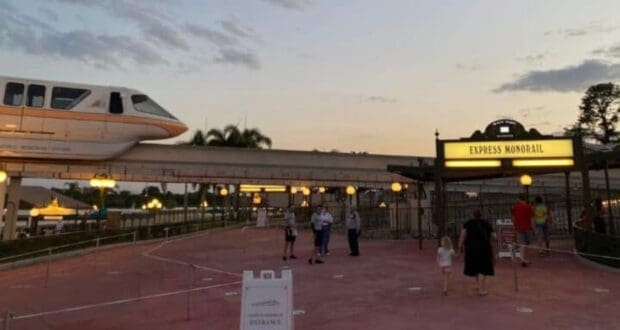
For over fifty years, the Walt Disney World Monorail System has represented the ultimate ideal of theme park travel. Sweeping past Cinderella Castle, gliding across Seven Seas Lagoon, and passing through the grand concourse of Disney’s Contemporary Resort, the “Highway in the Sky” is a beloved attraction in its own right.

However, behind the nostalgic charm and the iconic chime of “Por favor manténgase alejado de las puertas,” Disney World’s monorail network is facing a reliability crisis. Recent operational meltdowns have made it clear that routine maintenance can no longer keep pace with aging infrastructure.
When the Backup Options Fail
The fragility of the system was laid bare during a recent logistical nightmare across the Magic Kingdom resort loop. As reported by Inside the Magic and highlighted on social media, a technical failure on the Express Monorail line led to full-scale gridlock when secondary backup systems collapsed simultaneously.

Normally, when a monorail beam goes down during park exit, Cast Members redirect crowds toward the Seven Seas Lagoon Ferryboats or the Resort Monorail. But on this night, backup transportation suffered simultaneous downtime and severe capacity bottlenecks. Massive crowds backed up across the Toronto Transit Commission (TTC) plaza, leaving thousands of guests stranded in endless queues.
When secondary transit options fail alongside the main attraction, it exposes a transportation grid running on the absolute edge.
An Aging Fleet on Borrowed Time
The root cause of these disruptions comes down to simple math and mechanical fatigue. Disney’s current Mark VI monorail fleet debuted between 1989 and 1991. Built by Bombardier, these trains have been running 365 days a year for nearly four decades.
While Disney has performed interior refreshes over the years, the core mechanical systems are showing unavoidable wear:
- Drive System Exhaustion: Decades of non-stop operation have placed immense strain on drive motors and electrical bus bars.
- Finicky Door Sensors: Misaligned door sensors trigger frequent automatic safety stops, creating cascading delays across the entire line.
- Cabin Climate Strain: Florida’s brutal summer heat regularly overpowers aging air conditioning units, forcing trains offline mid-day.
- Beamway Weathering: The elevated concrete beams require ongoing monitoring after decades of exposure to tropical storms and thermal expansion.
Band-Aid repairs are no longer preventing major meltdowns. The Mark VI fleet is simply running on borrowed time.
The Case for a Full Overhaul and Expansion
Taking the monorail offline sounds drastic, but major municipal transit systems regularly shut down lines for complete modernization. A phased, section-by-section shutdown would allow Imagineers and transit engineers to execute a ground-up transformation:
- Roll Out Next-Gen Trains: Replace the Mark VI fleet with modern Mark VII or Mark VIII trains featuring higher cabin capacity, superior climate control, and wider automated doors.
- Modernize Train Controls: Implement Communications-Based Train Control (CBTC) to allow trains to run safely at tighter intervals, dramatically boosting hourly capacity.
- Refurbish Concrete Beamways: Reinforce, resurface, and re-wire the elevated beamways across both the Magic Kingdom and EPCOT loops.
- Expand to Other Parks: Extend the monorail beamways to link Disney’s Hollywood Studios, Disney’s Animal Kingdom, and Disney Springs into a unified transit grid.
Walt Disney designed the monorail to showcase the efficient future of public transport. Taking the lines offline for a full overhaul is the only way to restore the Highway in the Sky to its former glory.



Try the Ticket and Transportation Center. Toronto Transit Commission what a joke, LOL.