 Disney Tips Your Guide To A Great Disney Vacation

Marvel appears to have decided how it will move forward with the Fantastic Four franchise after the team’s first MCU film delivered mixed box office results.
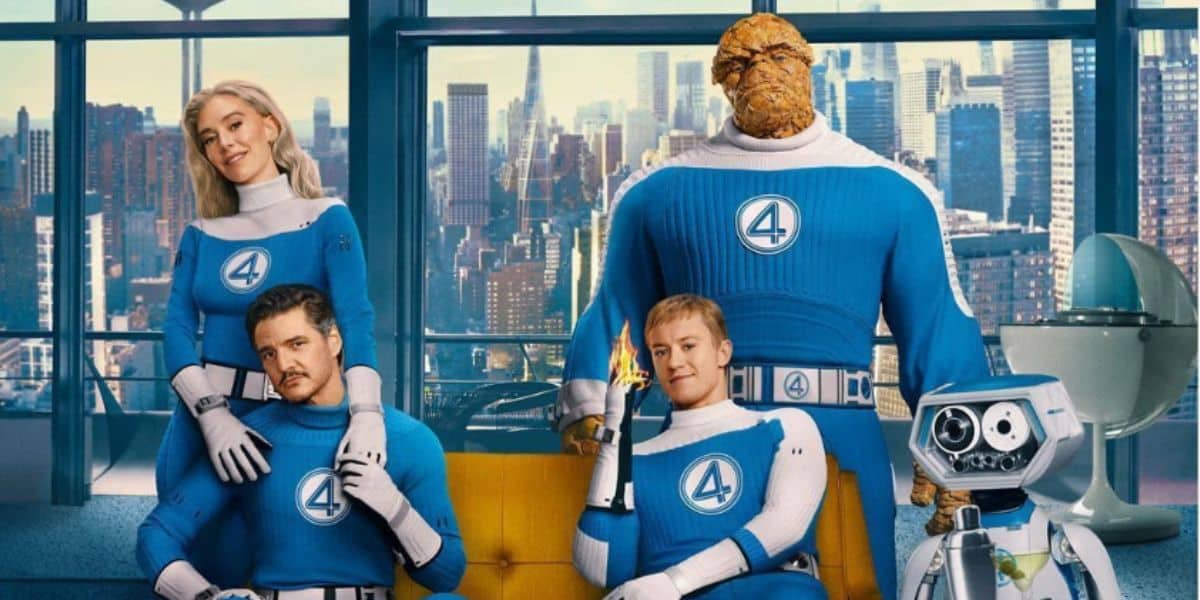
The Fantastic Four: First Steps (2025) introduced Reed Richards, Sue Storm, Johnny Storm, and Ben Grimm inside a stylized retro-futuristic setting. Pedro Pascal, Vanessa Kirby, Joseph Quinn, and Ebon Moss-Bachrach led the cast, with Ralph Ineson’s Galactus positioned as the looming threat.

Credit: Marvel Studios
Critically, the film performed better than many recent MCU entries. Reviews were largely favorable, earning an 86% Rotten Tomatoes score and sidestepping the harsher backlash that has plagued several post-Endgame releases.
Commercially, the response was more restrained. The film grossed $521.9 million worldwide — the highest total ever for a Fantastic Four movie, yet modest when measured against Marvel’s historical benchmarks.
In a period where Marvel has publicly scaled back output and reassessed its priorities, uncertainty followed quickly.

Credit: Marvel Studios
Box Office Reality Meets Franchise Planning
Marvel’s recent recalibration has been widely documented. Projects have been delayed, canceled, or reworked as the studio navigates rising production costs and uneven audience turnout.
Against that backdrop, a Fantastic Four sequel was far from guaranteed. The film did not underperform outright, but it failed to generate the momentum traditionally associated with franchise-launching titles.
Credit: Marvel Studios
That made Marvel’s next move notable.
According to industry insider @MyTimeToShineH, the studio has already decided to continue the story.
“Despite not being a huge box office hit, Marvel [is still planning] a Fantastic Four 2 post–Secret Wars and wants Matt Shakman back to direct,” they wrote. “They believe the team’s role in the Avengers films will draw more people to see the sequel.”

Credit: Marvel Studios
The logic is familiar. Marvel has long treated ensemble appearances as accelerators, using crossover visibility to elevate individual properties that initially struggled to break through.
Captain Marvel remains the clearest example. The character’s late reveal in Avengers: Infinity War (2018) preceded a solo release that crossed $1 billion globally.
Earlier MCU phases followed similar patterns. Iron Man 3, Thor: The Dark World, and Captain America: The Winter Soldier all benefited from renewed interest after The Avengers unified their characters onscreen.

Credit: Marvel Studios
From that perspective, Fantastic Four may still be early in its lifecycle rather than near its endpoint.
Avengers Integration Changes the Equation
That long-term thinking becomes clearer when viewed alongside Marvel’s upcoming slate.
Avengers: Doomsday is positioned as a major inflection point, with Doctor Doom named as its central villain. The character’s history is inseparable from the Fantastic Four, making their involvement more than incidental.

Credit: Marvel Studios
Doctor Doom was teased in the post-credits scene of The Fantastic Four: First Steps, a signal many viewed as Marvel quietly laying groundwork rather than offering immediate payoff.
Recent reports indicate Avengers: Doomsday will undergo additional filming in April. While no confirmation has been made regarding the Fantastic Four’s participation, their absence would be difficult to justify narratively.
One creative decision has already drawn scrutiny. Robert Downey Jr. is set to portray Doctor Doom, a move that has divided fans and commentators.
Some critics view the casting as a sign of caution — or desperation — from a studio eager to reconnect with its most profitable era. Others argue the choice reflects Marvel’s willingness to take calculated risks during a transitional phase.