 Disney Tips Your Guide To A Great Disney Vacation

What was once considered family-friendly entertainment is now increasingly viewed through a more critical lens.
In the years since Blackfish turned public attention toward the treatment of orcas in captivity, American audiences have become far less forgiving of theme parks that rely on marine mammals for shows and exhibits. SeaWorld Orlando, long the focus of animal rights protests, has seen criticism taper off somewhat. But at other Florida parks — including those owned by The Dolphin Company — the backlash is only intensifying.

Credit: Isabelle Puaut, Flickr
Now, that controversy is colliding with financial collapse.
Bankruptcy Puts Hundreds of Animals on the Auction Block
The Dolphin Company, the Mexico-based operator behind Miami Seaquarium and Gulf World Marine Park, filed for bankruptcy earlier this year. With it came a flood of revelations: missed rent payments, deteriorating animal care conditions, and even reports that the company’s ousted CEO forcibly took over its headquarters with armed personnel.
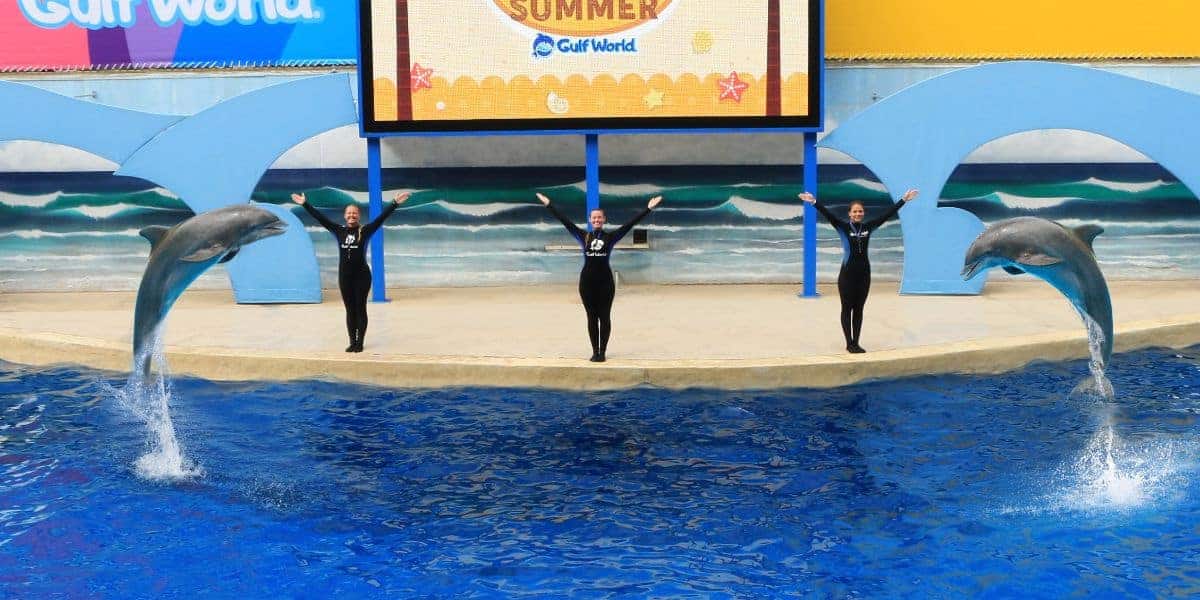
Amid the chaos, the company has confirmed its intention to sell off its animal inventory — a move authorized by U.S. Bankruptcy Court Judge Laurie Selber Silverstein. According to court documents, the sales process could begin within weeks and may include 295 dolphins, 51 sea lions, 18 manatees, and 18 seals across 30 properties.
Credit: Gulf World Marine Park
“Certain animals are located at parks that may be closed as the debtors pursue a sale of their businesses,” the court filing states. “The safety and humane treatment of these animals is paramount, and the cost of caring for such animals is exceedingly high while the debtors’ liquidity remains constrained.”
Yet the company’s assurances haven’t eased fears about how the transfers will be handled — or where the animals will end up.
A Long Record of Violations and Controversy
Miami Seaquarium has faced repeated citations from the USDA, including a dolphin discovered with a two-inch nail in its throat, another with a broken bolt lodged in its mouth, and a sea lion suffering from untreated eye pain. Inspectors also noted mold, crumbling enclosures, and a severely understaffed veterinary lab. In 2024, the park appeared to lose its American Humane Association certification.

Credit: Miami Seaquarium
At least 120 dolphins and whales have died in captivity at the Seaquarium, according to the advocacy group Dolphin Project. One of them was Tokitae (also known as Lolita), a longtime captive orca whose death in 2023 came just months after the park had pledged to release her into an ocean enclosure.
Gulf World, another Dolphin Company property, hasn’t escaped scrutiny either. A fifth dolphin died at the park earlier this year, prompting Florida Sen. Jay Trumbull to publicly demand the removal of all remaining dolphins.
Despite the company’s claims that animal welfare remains a priority, critics aren’t convinced.

Credit: Leonardo DaSilva, Flickr
“You have to have very experienced people doing these because, you know, they can be very stressful for the animals if they’re not done right,” former trainer Shanna Simpson told WLRN. She also expressed concern that the court has no independent advocate representing the animals, adding, “These are real, live animals that have impacted millions of people in Miami-Dade.”
In court filings, The Dolphin Company refers to its animals simply as “assets” and is seeking approval to sell them without the need for further hearings, unless an objection is filed quickly.
A hearing on the motion is scheduled for July 23. Until then, questions about how — and where — these animals will be relocated remain unanswered. But for many, the days of dolphins flipping through hoops in South Florida may soon be over.
Have you ever visited one of The Dolphin Company’s theme parks?