
 Disney Tips Your Guide To A Great Disney Vacation
Trump Clashes with ABC News During Conference
During a recent press conference, Donald Trump engaged in a contentious exchange with Mary Bruce, a reporter for ABC News. The discussion took a heated turn when Bruce pressed Trump about U.S. intelligence conclusions regarding the murder of journalist Jamal Khashoggi. She noted the outrage from 9/11 families, stating, “U.S. intelligence concluded that you orchestrated the brutal murder of a journalist.”
Trump, visibly upset, interrupted Bruce, labeling her a “terrible reporter” and branding ABC as a “crappy company.” His outburst reflects a significant challenge to the credibility of major media outlets, citing that they often operate with a “Democrat spin.” The confrontation underscores a recurring theme in Trump’s rhetoric—his war against the media he views as biased or adversarial.
Additionally, Trump escalated his rhetoric by threatening to revoke ABC’s broadcasting license, an assertion that has raised alarms about press freedoms and government overreach. His comments signal a strategy aimed at undermining media he perceives as hostile, a tactic that may resonate with his base but raises ethical questions regarding the role of the press in a democracy.
Disney’s Response to Trump’s Allegations
In the wake of Trump’s incendiary remarks, Disney—ABC’s parent company has notably refrained from publicly responding. This silence has led to speculation about whether the company is deliberating its public relations strategy amidst growing criticism. Analysts perceive this as a precarious balancing act; how Disney manages its support for ABC while dealing with potential fallout from public sentiment could shape its reputation.

The ongoing feud with Trump places Disney in a complex position, particularly as many believe media organizations should maintain independent reporting free from political influence. Should public sentiment sway against Disney due to perceived complicity with ABC, the company may face reputational damage, requiring a careful reevaluation of its communication strategy.
The implications of this silence are profound, potentially affecting Disney’s operations and its relationship with its audience. As stakeholders weigh the future of their investment in media credibility, they must consider the ramifications of aligning with any perceived adversarial networks.
Impact on Jimmy Kimmel’s Late-Night Show
Trump’s ire also extended to late-night host Jimmy Kimmel, who criticized the president’s meeting with Saudi Crown Prince Mohammed bin Salman. Kimmel described the meeting as “cartoonishly evil,” igniting Trump’s response. Following Kimmel’s monologue, Trump publicly urged ABC affiliates to boycott the show and called for its removal from the air.
Kimmel’s remarks about Trump’s diplomatic choices are indicative of the heightened political stakes that late-night programming faces. In an era where political commentary increasingly influences public discourse, Kimmel’s show finds itself at the intersection of humor and political commentary, with Trump’s challenge serving as a litmus test for the intersection of entertainment and political freedom.
Kimmel’s show has recently faced uncertainty, particularly in light of earlier controversies that resulted in his temporary removal from ABC. The comedian’s positioning within such a politically charged environment places his program under increased scrutiny, highlighting the rugged landscape for late-night television hosts amid an increasingly polarized media climate.
Broader Effects on Media and Public Trust
The fallout from Trump’s criticisms has extended to regulatory bodies, with the Federal Communications Commission (FCC) launching an investigation into ABC’s operations and its relationship with affiliated stations. This inquiry contributes to the ongoing narrative about political influence over media and has the potential to reshape how news organizations operate in their pursuit of credibility.
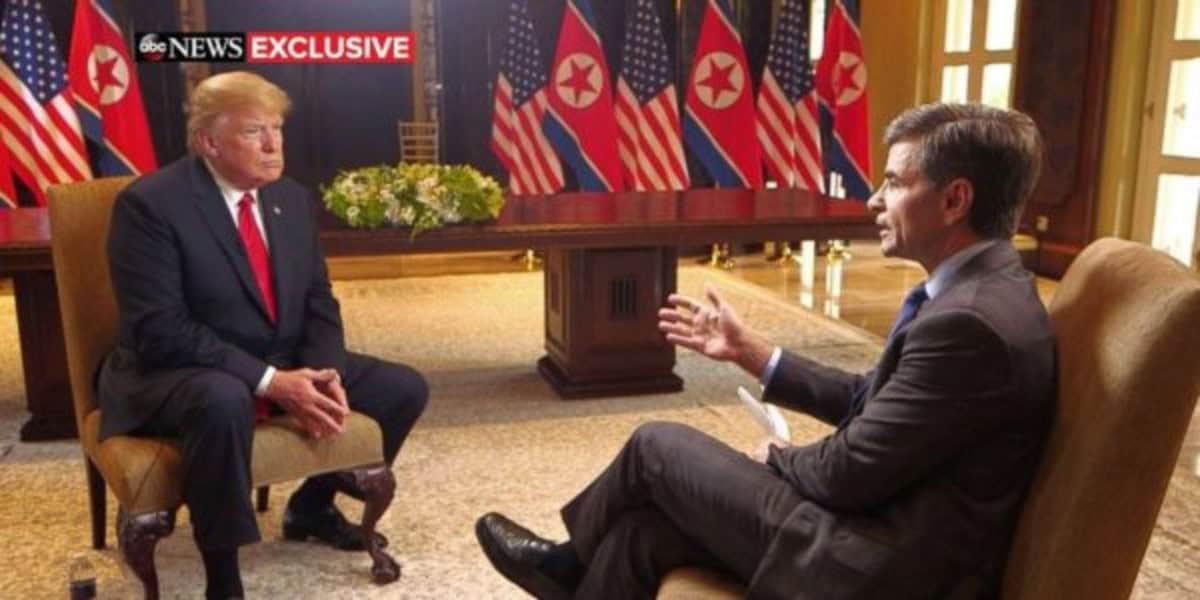
Public reactions to Trump’s statements have varied widely. Many supporters echo his sentiments against ABC, expressing frustration with what they perceive as biased coverage. Conversely, critics argue that such rhetoric undermines the integrity of journalism, posing a significant threat to press freedom.
As this situation unfolds, observers highlight the need for media organizations to balance the conflict between political power and journalistic integrity. This ongoing battle poses profound implications for how journalism is perceived, raising critical questions about trust in media and the essential functions of a robust democracy. The tension surrounding Trump’s confrontations with both ABC and Kimmel signals a growing divide in media perceptions and public trust that may continue to evolve in the coming months.




Trump refujses to say “no,I won’t give a Convicted Sextrafficer/Sexoffened a Pardon”
Also,on TV he said “if she wasn’tmy Daughter,I’d probely eing datoing her” about Ivanka.
Nuff said.