 Disney Tips Your Guide To A Great Disney Vacation

The first week of February 2026 was designed to be a masterclass in corporate “victory laps” for The Walt Disney Company. In a dizzying 72-hour window, the company finally resolved its multi-year succession drama by naming Josh D’Amaro as the next CEO, reported a staggering $10 billion in quarterly revenue for its Parks division, and solidified a $60 billion roadmap for the future.
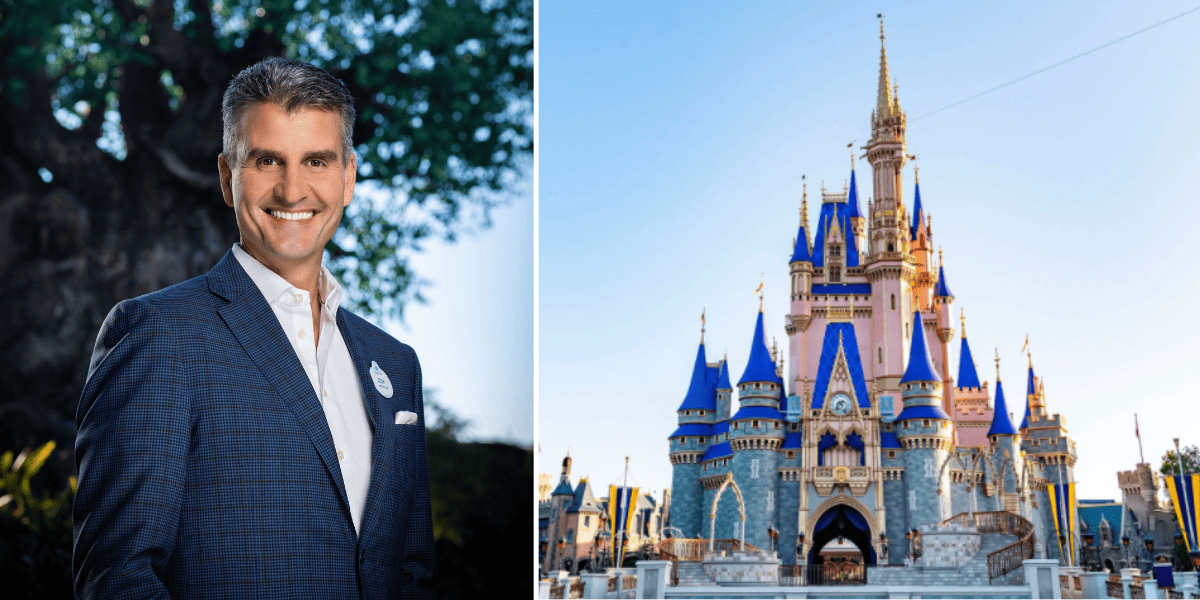
By any traditional measure of sentiment, it was a “Disney fan’s dream.” D’Amaro—the charismatic, sneaker-wearing executive beloved by parkgoers—was officially taking the throne. Yet, the stock market responded with a cold, $15 billion shrug. As reported by Forbes and other financial analysts, Disney stock didn’t just stumble; it suffered a 5% weekly crash, wiping out billions in market capitalization even as the company “beat” its earnings targets.
How does a company “win” the succession race and still lose $15 billion in five days? The answer is a sobering reminder of the divide between the magic in the parks and the cold calculus of Wall Street.
The “Selling the News” Trap
Financial analysts often point to a phenomenon called “sell the news.” For much of late 2025, Disney’s stock price had been buoyed by a “succession premium.” Investors were bidding up the cost in anticipation of a resolution to the Bob Iger era.

When the Board officially crowned Josh D’Amaro on February 2, that specific brand of uncertainty vanished. With no more speculation to drive the price, institutional investors did what they often do: they harvested their gains. However, the scale of the drop—that $15 billion wipeout—suggests this wasn’t just a routine sell-off. It was a vote of profound skepticism regarding D’Amaro’s $60 billion expansion plan.
Fear of the “Capex” Monster
The primary source of the “white-knuckle ride” for investors is the very thing that has fans most excited: the massive infrastructure spending. While D’Amaro spoke passionately during the earnings call about Villains Land, Monsters, Inc. Land, and Tropical Americas, Wall Street was looking at the bill.

Investors currently favor “lean and mean” tech companies that prioritize immediate share buybacks and high-margin digital growth. Disney, conversely, is doubling down on “bricks and mortar.” Building a theme park land is a slow-burn investment; it takes years to construct and decades to realize a full return. The market’s 5% dip reflects fear that Disney is over-leveraging its free cash flow into long-term physical assets at a time when the media landscape is shifting beneath its feet.
Can a “Parks Guy” Save the Studio?
There is also a lingering “Baptism by Fire” for D’Amaro regarding his background. While he is arguably the most successful Parks executive in Disney history, he is the first CEO in the modern era to ascend without a background in film studio management or linear media strategy.

Wall Street is notoriously nervous about the “Content Moat.” Despite massive box-office hits like Zootopia 2 and Avatar: The Way of Water in 2025, investors are worried that D’Amaro’s focus on physical experiences might come at the expense of revitalizing the core Marvel and Pixar brands. Furthermore, ESPN’s high-stakes pivot to a fully direct-to-consumer model remains a massive risk. The stock crash suggests investors are waiting to see if the “Rockstar Chairman” has the same magic touch with a streaming algorithm as he does with a theme park guest.
The Outlook Disconnect
Perhaps the most frustrating part of the $15 billion loss is that the actual earnings were quite strong. The Experiences segment hit record revenue, and streaming margins finally reached double digits (12%).

However, during the call, management provided a cautious outlook for the latter half of 2026. They warned of “moderating demand” and a potential slowdown in international visitation to domestic parks. In the stock market, you aren’t rewarded for what you did yesterday; you are priced based on what you’ll do tomorrow. By being honest about potential headwinds, D’Amaro inadvertently provided a “reason to sell” to the market, already fit.
Conclusion: Magic vs. Margins
The $15 billion wipeout is a sobering reminder that “Disney Magic” has a high cost of entry on Wall Street. Josh D’Amaro is inheriting a company that is more profitable than ever, yet more scrutinized than ever.

To stop the slide, D’Amaro will need to prove he can bridge the gap between “Magic” and “Margins.” He needs to show that his $60 billion gamble will yield results that satisfy the boardroom as much as the fans. For now, the “white-knuckle ride” continues, but if D’Amaro can turn those shovels in the ground into a new era of diversified growth, the market will eventually come back for the ride.
Do you think Wall Street is overreacting to the $60 billion expansion, or is the $15 billion loss a fair warning about the costs of “Magic”?