 Disney Tips Your Guide To A Great Disney Vacation

In the high-stakes world of Disney fandom in 2026, a new kind of “Disney Vacation” is trending: the Historical Pilgrimage. As The Walt Disney Company’s American parks—led by the “Inclusion” initiatives of the D’Amaro era—have systematically scrubbed, reimagined, and replaced scenes deemed culturally insensitive, a curious phenomenon has emerged. For many fans, the only way to see the “original” Disney is to buy a flight to Japan.

While Walt Disney World and Disneyland Resort have spent the last few years evolving into “living documents” that reflect modern social values, Tokyo Disneyland remains a strikingly preserved time capsule. Here, the “forbidden” versions of Disney’s most iconic rides aren’t just surviving; they are the park’s biggest draws.
The Splash Mountain Schism
The most glaring example of this cultural divide is the status of Splash Mountain. In the United States, the Briar Patch has been officially cleared out to make way for Tiana’s Bayou Adventure. The move was a definitive statement by Disney corporate: the 1946 film Song of the South and its caricatured depictions of the American South no longer have a place in the domestic parks.

However, in Tokyo, Br’er Rabbit is still outrunning Br’er Fox every single day.
To the Japanese audience, the controversy surrounding the source material is virtually non-existent. Because the historical nuances of the American post-Civil War era don’t carry the same weight in Japan, the Oriental Land Company (OLC)—which owns and operates the Tokyo resort—sees the ride as a technical masterpiece of animatronics and storytelling rather than a social liability. For the OLC, “if it isn’t broken (and it’s still pulling 100-minute waits), don’t fix it.”
Neverland and the “Original” Tiger Lily
In late 2024 and early 2025, Disney fans in Florida and California saw a significant update to Peter Pan’s Flight. The scenes featuring the “Indian Village” were overhauled to remove stereotypical depictions of Native Americans, replacing them with a more respectful, culturally authentic representation of Tiger Lily and her tribe.
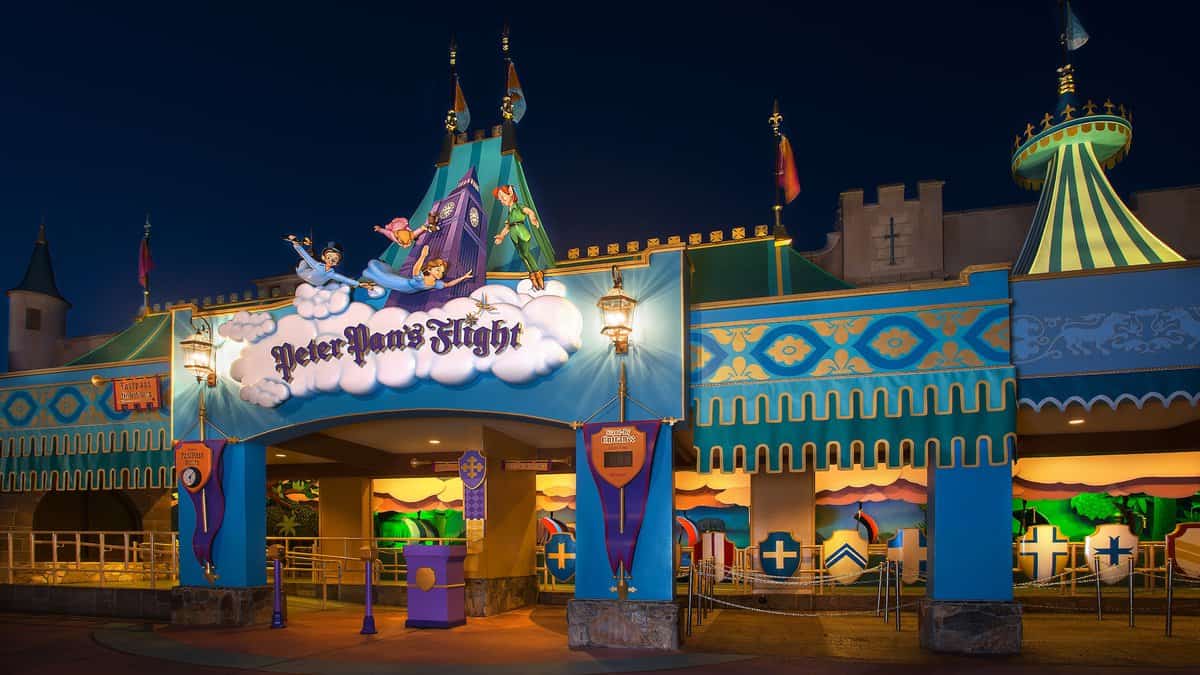
In Tokyo, however, the 1983 opening-day version of the ride remains untouched. The caricatured braves and the “Pickaninny” tropes that were deemed too problematic for American audiences are still flying high in Japan. In the Japanese market, these characters are viewed as generic fairytale elements rather than reflections of real-world marginalized groups. This “preservationist” approach has turned Tokyo into the last place on Earth to witness the original Imagineering vision for Neverland—stereotypes and all.
The “Head” Salesman: Trader Sam’s Last Stand
The Jungle Cruise underwent a massive “sensitivity sweep” in the U.S. in 2021, most notably resulting in the eviction of Trader Sam. The legendary “head” salesman of the jungle was replaced by a “Lost and Found” gift shop to move away from depictions of indigenous people as “savages” or “headhunters.”
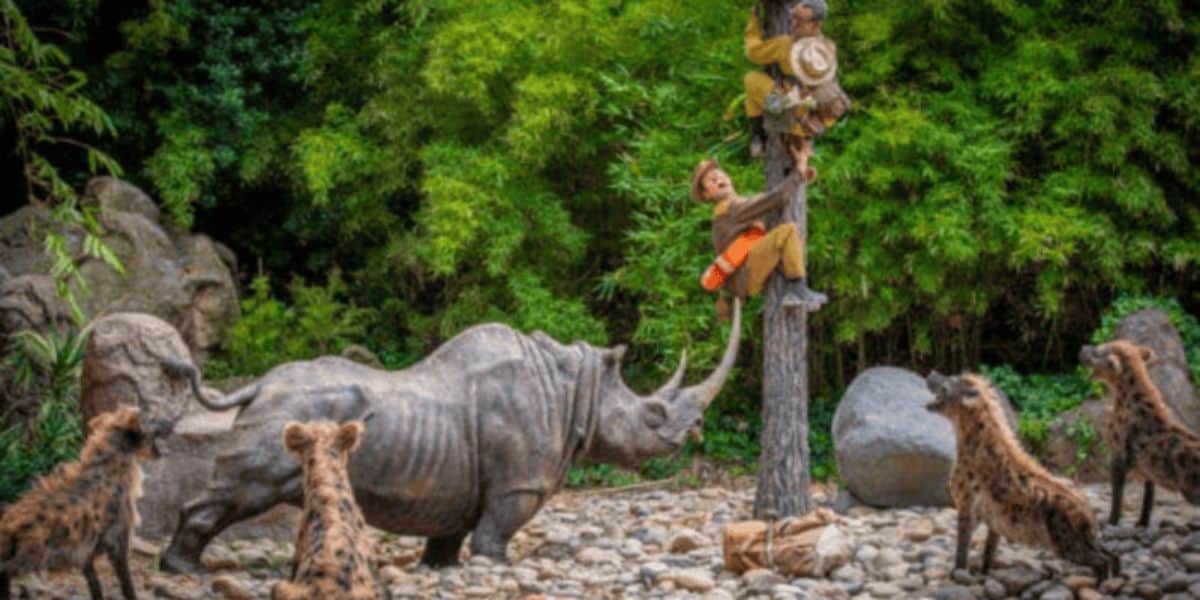
In Tokyo’s Jungle Cruise: Wildlife Expeditions, the “native” encounters remain much more aligned with the 1955 original. While the ride received a massive technological facelift in 2014, the OLC chose to enhance the “adventure” tropes rather than remove them. To the Japanese guest, the campy, mid-century “exoticism” is part of the charm, not a cause for concern.
Why Tokyo Won’t Change: The OLC Factor
The reason for this “Disney Time Capsule” isn’t just cultural; it’s contractual. Because the Oriental Land Company operates the park under a licensing agreement, it has the final say on the guest experience.
- Japanese Traditionalism: There is a deep cultural value placed on “perfection” and “authenticity” in Japan. To many local fans, the original 1980s designs are sacred relics.
- The Absence of Western Social Pressure: The specific domestic social movements that drove changes in the U.S. do not have the same footprint in Japan.
- Cost-Benefit Analysis: Retheming a ride like Splash Mountain costs hundreds of millions of dollars. Without a domestic “PR crisis” to solve, the OLC prefers to spend that capital on original expansions like Fantasy Springs.
Conclusion: Two Disneys, One Schism
As we move further into 2026, the gap between the American and Japanese parks is only widening. The U.S. parks have become a reflection of who we are now, while Tokyo Disneyland has become a museum of who we used to be.

Whether you view Tokyo’s refusal to edit as a victory for historical preservation or a failure of global progress, one thing is sure: the “Forbidden Kingdom” is now the only place left to see the Disney that once was.
Would you travel 5,000 miles to see the original Splash Mountain, or do you prefer the “Bayou” update?