
 Disney Tips Your Guide To A Great Disney Vacation

The operational philosophy governing Walt Disney World transportation is undergoing its most significant evolution in decades. For years, the resort’s sprawling grid of monorails, ferryboats, buses, and Skyliner gondolas operated as an open-access ecosystem, allowing visitors to move freely across the property. However, the summer of 2026 has marked a definitive shift toward data-driven gatekeeping and guest segmentation, starting with the strict validation checks launched at Disney Springs on June 28.

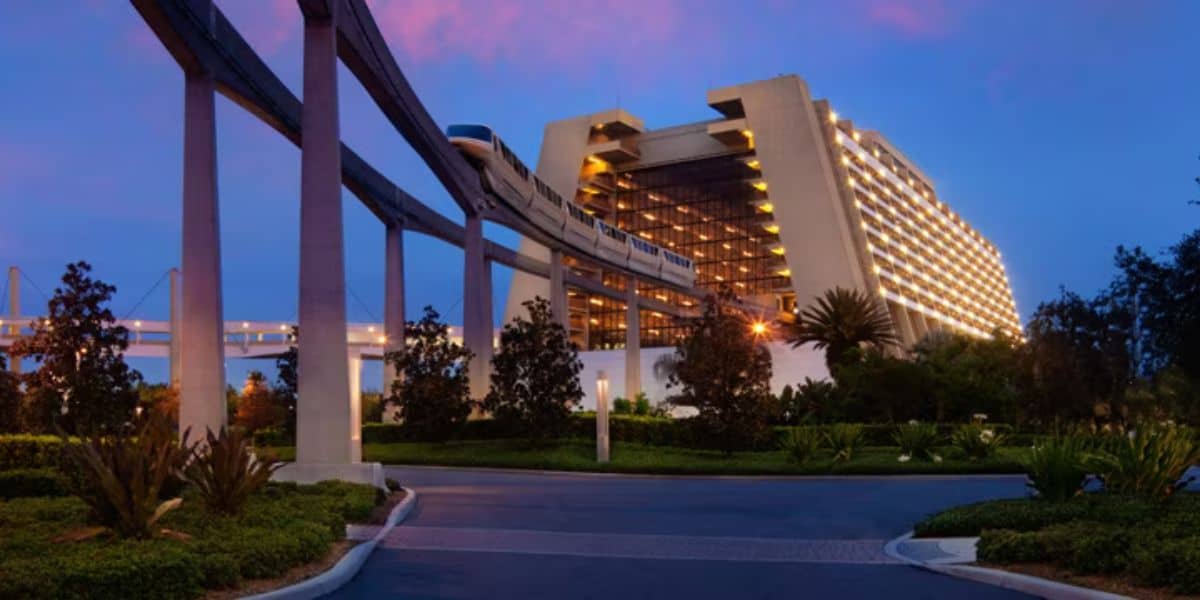
Now, public attention has turned toward the property’s flagship transit lines. A new wave of online speculation, catalyzed by discussions on X from theme park observer @scottxavier, suggests that Disney may be preparing to implement structural restrictions on the Resort Monorail platform at the Transportation and Ticket Center (TTC).
According to these rumors, day guests without verified hotel credentials or confirmed dining reservations could be barred from boarding the Resort Monorail loop, effectively isolating the premium Magic Kingdom Resorts from casual, nonpaying foot traffic. While Disney has not officially confirmed these changes, the speculation aligns precisely with a sequence of concrete restrictions recently deployed to manage guest flow around the Seven Seas Lagoon.
Digital Gatekeeping: Geotracking Mobile Orders
To evaluate the plausibility of the rumored monorail restrictions, one must first look at the digital infrastructure Disney has already activated to control day-guest access. For years, driving a personal vehicle to Deluxe properties like Disney’s Contemporary Resort, Polynesian Village Resort, or Grand Floridian Resort & Spa required a valid hotel room key or an advance table-service dining reservation.

Day-guests quickly discovered a convenient loophole: placing a quick-service mobile order on the My Disney Experience app for an item at a resort café and showing the digital receipt to parking lot guards to secure entry.
To permanently close this parking workaround, Disney deployed highly localized geotracking technology within its mobile ordering interface. The app now actively verifies a user’s real-time GPS coordinates before allowing them to finalize an order. If a guest attempts to select “I’m Here, Prepare My Order” while sitting in their vehicle at the TTC parking lot or outside the immediate resort perimeter, the app blocks the transaction. This ensures only legitimate hotel guests and confirmed diners can utilize the quick-service facilities.
Guarding the Ground: Restricted Pedestrian Paths
In tandem with digital geotracking, Disney has tightened physical access along the scenic walking paths that trace the edge of the Seven Seas Lagoon. Following the completion of the pedestrian path linking the Grand Floridian directly to the front entrance of Magic Kingdom, it became theoretically possible for a guest to park at the TTC, walk through the Polynesian Village Resort, bypass the monorail queues entirely, and walk directly to the park gates.
To manage foot traffic volume and preserve these walkways as a quiet, premium amenity for hotel residents, Disney began banning non-resort guests from using these resort paths to walk from the Transportation and Ticket Center to Magic Kingdom. Security checkpoints positioned along the pedestrian boundaries now actively turn away offsite day-guests, redirecting them back toward the central mass transit lines.
The New Frontier: Scanning at the TTC
The emerging rumor regarding the Resort Monorail loop represents the next logical phase in this zoning strategy. As highlighted by @scottxavier and debated across online enthusiast forums, the proposed change would structurally alter how the Transportation and Ticket Center manages its boarding platforms.
Currently, the TTC splits its monorail traffic into two separate lines: the Express Monorail, which travels directly to the Magic Kingdom entrance, and the Resort Monorail, which stops sequentially at the Polynesian, the Grand Floridian, the Magic Kingdom, the Contemporary, and returns to the TTC. Historically, any guest could board either line, allowing casual day-guests to easily use the Resort Monorail to “resort hop,” browse retail shops, or purchase quick-service snacks.
The rumored policy would introduce digital touchpoints—such as MagicBand or MagicMobile scanning tablets—at the entrance turnstiles for the Resort Monorail platform at the TTC. Non-resort guests would be systematically blocked from entering the queue unless they could scan a valid resort room key or a confirmed, timed dining reservation code. Those without credentials would be restricted exclusively to the Express Monorail or the ferryboat lines, preventing them from using the TTC as a launching point to explore the hotels casually
Preserving the Premium Experience
While a monorail restriction would undoubtedly frustrate casual day-guests and local annual passholders who enjoy resort hopping, the corporate logic behind such a policy is grounded in capacity management. The Resort Monorail loop frequently experiences severe overcrowding, particularly during afternoon storms and immediately following the nightly fireworks.
When thousands of day-guests flood the resort line simply to escape long queues at the Express Monorail, they directly compromise the transportation speed and comfort promised to guests paying premium rates for Deluxe accommodations. By filtering out non-resort traffic at the TTC source, Disney can ensure its transportation assets are prioritized for the consumers directly driving luxury lodging revenue, bringing a new level of predictability to the Magic Kingdom Resorts ecosystem.



Disney acts like a communist country with all these rules and regulations .Dont waste your time .Go to Seaworld or Universal Studio