 Disney Tips Your Guide To A Great Disney Vacation

It is late March 2026, and the digital hallways of the Disney community are echoing with a single, staggering number: $1 billion. Following the high-profile collapse of a rumored partnership between The Walt Disney Company and OpenAI, the House of Mouse finds itself holding a massive, unallocated capital pool. What was once destined for “generative storytelling” and AI-driven park navigators is now sitting on the balance sheet, waiting for a new purpose.
The conversation ignited when industry reporter Scott Gustin took to X (formerly Twitter) to muse on the possibilities. Rather than mourning the loss of a “Smarter Mickey,” the fanbase responded with a resounding cry for a return to the physical, the tangible, and the “magical.” For a company currently navigating record-breaking Spring Break crowds and stiff competition from Universal’s Epic Universe, this $1 billion represents a chance to fix the core of the Disney experience.
1. The Maintenance Mandate: “Fix the Yeti”
If you want to know what the average Disney fan values, look no further than their obsession with a 25-foot-tall broken animatronic. For nearly two decades, the Yeti in Expedition Everest has been stuck in “B-Mode”—flickering under a strobe light — because the mountain’s structural foundation couldn’t support its massive movements.

In the wake of the OpenAI fallout, the “Disco Yeti” has once again become the poster child for Disney’s maintenance backlog. Fans argue that $1 billion could easily fund the complex structural surgery required to fix the Yeti, along with refreshing the “A-mode” effects on legacy rides like Pirates of the Caribbean and The Haunted Mansion.
“I don’t need an AI chatbot to tell me where the nearest churro stand is,” one viral comment noted. “I need the Yeti to lunge at me again. Use the OpenAI money to buy the jackhammers and fix the icons.”
2. Accelerating the “Big Four” Expansions
Disney has already laid out its most ambitious roadmap in a generation. We know Villains Land and Cars Land are coming to the “Beyond Big Thunder” area at Magic Kingdom. We know Monstropolis is set to bring a door-hanging suspended coaster to Hollywood Studios. And we know Tropical Americas (Pueblo Esperanza) is replacing DinoLand U.S.A. at Animal Kingdom.

However, “announced” and “open” are two very different things. Currently, many of these projects have timelines that stretch into 2030. The fan demand for the $1 billion is simple: hit the turbo button.
- Villains & Cars (Magic Kingdom): Construction walls are already up, but fans fear these lands will be opened in tiny phases. $1 billion could ensure both lands open with their full complement of E-ticket attractions and immersive dining years ahead of schedule.
- Monstropolis (Hollywood Studios): Fans want that billion-dollar buffer to ensure the “Door Coaster” is as kinetically impressive as the concept art suggests, without any “budget-cut” scaling back of the surrounding city.
- Tropical Americas (Animal Kingdom): With Encanto and Indiana Jones attractions planned, fans want to ensure this “village of hope” is a world-class environment that rivals the immersion of Pandora.
3. Investing in “Real Intelligence”: The Cast Member Experience
In the high-stress environment of 2026, where wait times for Slinky Dog Dash and Tiana’s Bayou Adventure are hitting 180 minutes, the front-line defense is the cast member. In the comments on Gustin’s thread, a large portion of the fanbase argued that Disney should pivot from “Artificial Intelligence” to “Human Excellence.”

The community is urging Disney to allocate a significant portion of the $1 billion to cast member wages, housing, and benefits. By investing in the people who actually make the magic—rather than an algorithm—Disney ensures that the parks remain the premier vacation destination. A $1 billion “Human Intelligence” fund could provide retention bonuses and a higher wage floor, making Disney the most desirable employer in Florida once again.
Conclusion: The Magic is in the Concrete
Disney is at a crossroads. They can either look for the next tech trend to chase or listen to the thousands of fans standing in 3-hour lines who are begging them to fix the foundations and build the future.
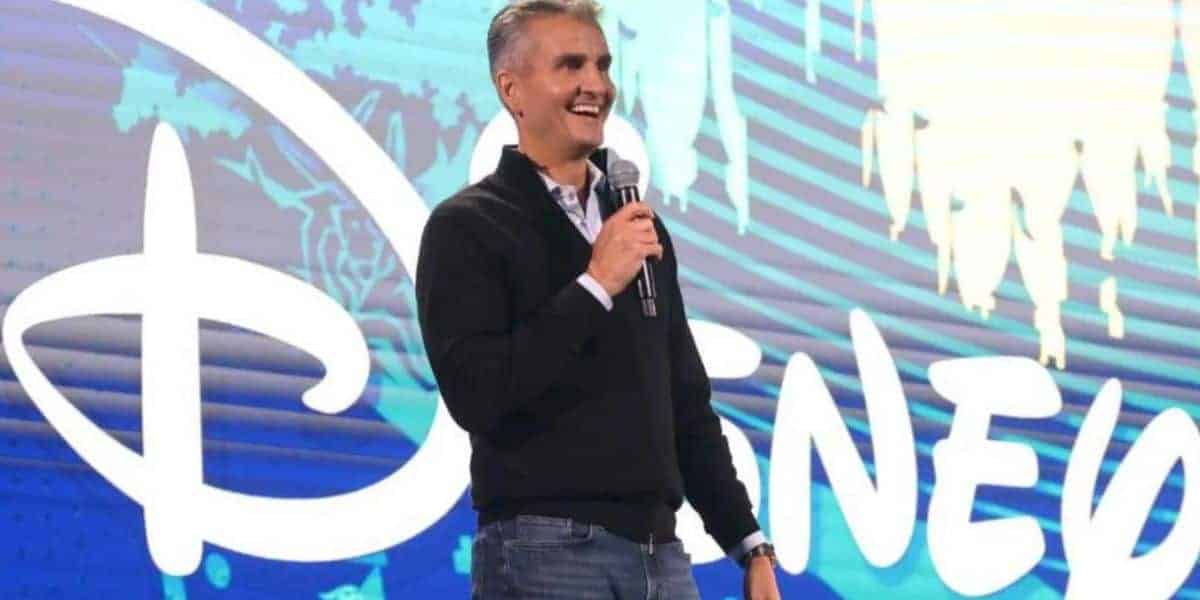
The collapse of the OpenAI deal isn’t a failure—it’s an opportunity for a reset. Under Josh D’Amaro’s leadership as CEO, the company has a chance to prove that it still believes in the “Real World” of the parks. As the debate continues online, the message to Burbank is clearer than ever: the magic isn’t found in the code; it’s in the concrete.
What would YOU do with $1 billion of Disney’s money? Fix the Yeti or build the Fifth Gate? Join the conversation in the comments below!